

Why YouTube Shorts Creators Are Cashing In on the 2026 Algorithm Shift
If you’ve been watching the YouTube creator space, you know something seismic just happened. In January 2026, YouTube rolled out major Shorts algorithm updates that fundamentally changed how creators can grow subscribers fast[1]. And right now, there’s a massive land grab happening—creators who understand these changes are seeing explosive growth, while others are still stuck using outdated tactics[2].
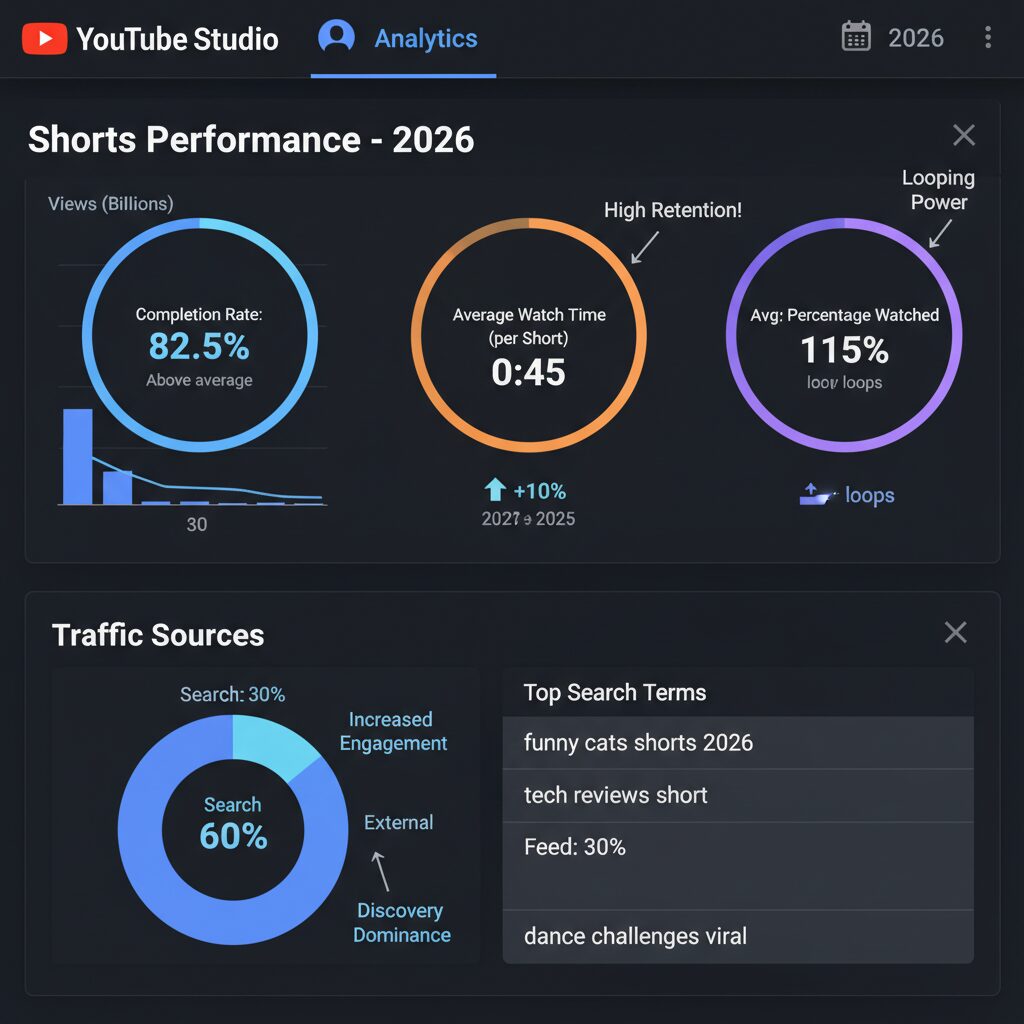
The opportunity? Building a specialized course that teaches creators how to leverage the 2025–2026 Shorts algorithm for rapid subscriber growth is not just timely—it’s urgently needed. Here’s why: 70% or more of YouTube Shorts traffic now comes from search results, not just the feed[2]. The metrics YouTube cares about have completely changed[2]. And the creators who understand this are the ones going viral.
This guide walks you through building a high-value course framework that positions you as the expert on the new algorithm—and turns curious viewers into paying students willing to invest in their growth.
The 2026 Algorithm Landscape: What Actually Changed
Before you can teach others, you need to understand exactly what YouTube changed in early 2026. This isn’t hype—these are documented, measurable shifts that affect every creator’s growth strategy.
Update #1: Dedicated Shorts Search Filters (January 2026)
YouTube introduced a dedicated “Shorts” filter in search results, separating Shorts from long-form videos[1]. This is massive because it means Shorts are now a first-class search result type. Creators who optimize their Shorts for search terms—tutorials, quick tips, “how to…” content, listicles, and news-style explainers—can now win in both the feed AND search results[1].
For your course, this is a major module: teaching students how to structure searchable Shorts that answer specific questions and rank for keywords. This is the difference between viral luck and predictable, repeatable growth.
Update #2: Watch Time + Views = “Popularity” (March 2026)
Here’s where most creators get it wrong. The old playbook was all about the first 3 seconds and view count. That’s dead. In March 2026, YouTube shifted to prioritizing watch time AND views together[2]. A Short that gets 1,000 views with 85% average completion rate will outperform a Short with 5,000 views and 40% completion[2].
This changes everything about course structure. Your students need to learn: hook strategies that work (not just shock value), retention tactics for the middle 60% of the video, and how to calculate their ideal video length based on completion rate targets (above 75% for maximum algorithm boost)[2].
Update #3: Negative Feedback Matters More
YouTube now collects viewer feedback more directly and counts it more heavily in ranking decisions[1]. If viewers skip instantly, hit “not interested,” or give negative survey responses, your Short’s reach stalls faster than before[1]. This means clickbait thumbnails, misleading titles, and misaligned expectations are riskier than ever.
Your course should teach authentic positioning and expectation-matching—not because it’s “right,” but because it’s what the algorithm rewards in 2026.
Core Course Modules: The “Subscribers Fast” Framework
A successful YouTube Shorts course in 2026 needs these foundational modules:
Module 1: The Search-First Mindset (Weeks 1–2)
Teach students that 70% of Shorts traffic now comes from search[2]. This shifts their entire content strategy. Instead of chasing viral trends, they’re answering searchable questions. Module content includes:
• Keyword research for Shorts (using YouTube’s search bar, Google Trends, and competitor analysis)[1]
• Structuring Shorts as answers (problem → solution → payoff in under 60 seconds)
• Writing titles and descriptions that rank (without clickbait)
• Testing searchable topics before investing heavy production time
Module 2: Retention Mastery—The New Algorithm Metric (Weeks 3–5)
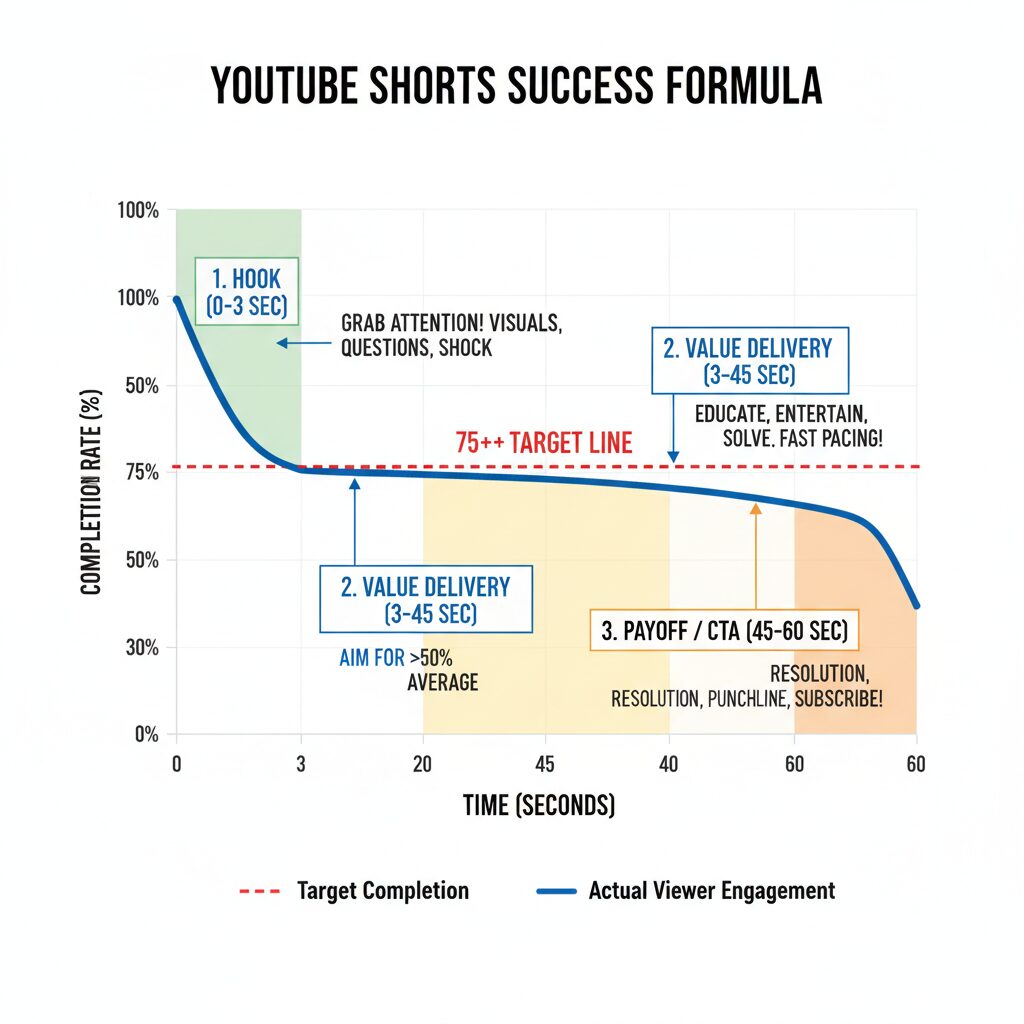
This is where most courses fail. They teach “hooks” but not completion rates. Your module teaches the science: if a Short is under 30 seconds, average view duration must be GREATER than the video length for algorithm boost[2]. For longer Shorts, aim for 75%+ completion[2].
Practical lessons:
• Hook formulas that work in 2026 (pattern interrupt + curiosity gap, not just shock)
• Structure templates: opening hook (3 sec), value delivery (middle 60%), payoff (final 15%)
• Dead time elimination (the algorithm penalizes pacing issues)
• A/B testing retention rates using YouTube Analytics
• How to calculate your target video length based on topic and audience
Module 3: Multi-Video Testing & Iteration (Weeks 6–8)
The creators winning in 2026 publish more, test faster, and iterate ruthlessly[2]. This module teaches the “rapid experimentation” playbook: how to batch-produce Shorts, test variations, and scale what works.
Include:
• Batch production systems (filming 10–20 Shorts in one session)
• Variation testing (same topic, different hooks; same hook, different topics)
• Analytics interpretation (which metrics matter, which don’t)
• Posting cadence optimization (frequency without burnout)
• Scaling winners and cutting losers fast
Module 4: Converting Shorts Viewers into Subscribers (Weeks 9–10)
Views are vanity; subscribers are the goal. This module closes the loop: how to use Shorts as a subscriber acquisition funnel. Teach students to:
• Use Shorts to drive viewers to channel (with clear CTAs)
• Create Shorts series that require subscription to follow
• Link Shorts to long-form content that builds deeper relationships
• Use community posts and premieres to convert casual viewers
• Measure subscriber acquisition cost from Shorts (not just views)
Module 5: Analytics & Optimization for 2026 Metrics (Weeks 11–12)
YouTube changed what metrics matter[2]. This module teaches the new dashboard: average view duration vs. video length, completion rate targets, search traffic attribution, and negative feedback signals. Include real examples of viral videos and their metrics so students can reverse-engineer success.
Pricing & Positioning Strategy
Based on the market in 2026, successful YouTube creator courses typically price between $197–$497 for self-paced content, or $997–$2,997 for cohort-based or group coaching models. Given the urgency (the algorithm literally just changed in March 2026) and the specificity of your framework, a $397 self-paced course or $1,497 group coaching option would position you as premium without being gatekept.
Launch angle: “The March 2026 Algorithm Just Changed Everything. Here’s the Only Course Built Around the New Rules.” This creates urgency and authority simultaneously.
Why This Course Concept Wins
Most “grow fast” courses are generic and outdated within months. Yours is built on documented, real-time algorithm changes that happened in January–March 2026. Your students aren’t learning theory—they’re learning the exact system YouTube just implemented. That’s a massive competitive advantage and a clear reason to charge premium pricing.
The secondary benefit? As an expert who teaches the 2026 algorithm, you’ll attract media attention, partnership opportunities, and affiliate revenue from tools and services that help creators execute these strategies. Your course becomes the anchor for a larger creator education business.
Your Next Steps
Start by mapping your 12-week curriculum in detail. Record 3–5 sample lessons to test market demand. Launch with a small cohort (25–50 students) at a discounted rate, collect testimonials and results, then scale to self-paced with a higher price point. The creators who move fastest on this opportunity will own the market for the next 12 months—until YouTube changes the algorithm again.
The window is open. The algorithm is fresh. Your students are ready. Build it now.

Unlock Full Article
Watch a quick video to get instant access.

Social Media