

Small Business Playbook: Converting Your Cleaning Closet to Green on a Tight Budget
Your cleaning supply closet is costing you more than you think. Between frequent repurchases, employee sick days from harsh chemical exposure, and the growing pressure from clients demanding sustainable practices, conventional janitorial supplies are becoming a liability rather than an asset. Here’s the reality: 72% of facility managers now rank sustainability as a key factor when awarding janitorial contracts, and 80% of consumers want complete transparency about how products are made. But here’s the good news—switching to green janitorial supplies doesn’t require a complete budget overhaul. In fact, businesses switching to eco-friendly cleaning products see a 20%-30% reduction in cleaning costs over time.
This playbook walks you through a practical, step-by-step strategy to convert your cleaning operations to green without breaking the bank. Whether you manage a small office, a retail space, or a mid-sized facility, you’ll discover which products to swap first, how to leverage concentrates and bulk formats, and how to negotiate with suppliers to keep costs under control.
Step 1: Audit Your Current Spending (Week 1)
Before making any changes, understand where your cleaning budget actually goes. Pull your last three months of janitorial supply invoices and categorize spending by product type: all-purpose cleaners, disinfectants, glass cleaners, floor care, and specialty items. Most small businesses discover they’re overspending on products that could be consolidated or replaced with more efficient alternatives.
This audit reveals your highest-impact opportunities. If you’re spending $200 monthly on glass cleaner alone, that’s your first target. If disinfectants dominate your budget, focus there. This data-driven approach ensures your green transition actually reduces costs rather than adding expense.
Step 2: Start with High-Impact, Low-Cost Swaps
Swap #1: Concentrated All-Purpose Cleaners
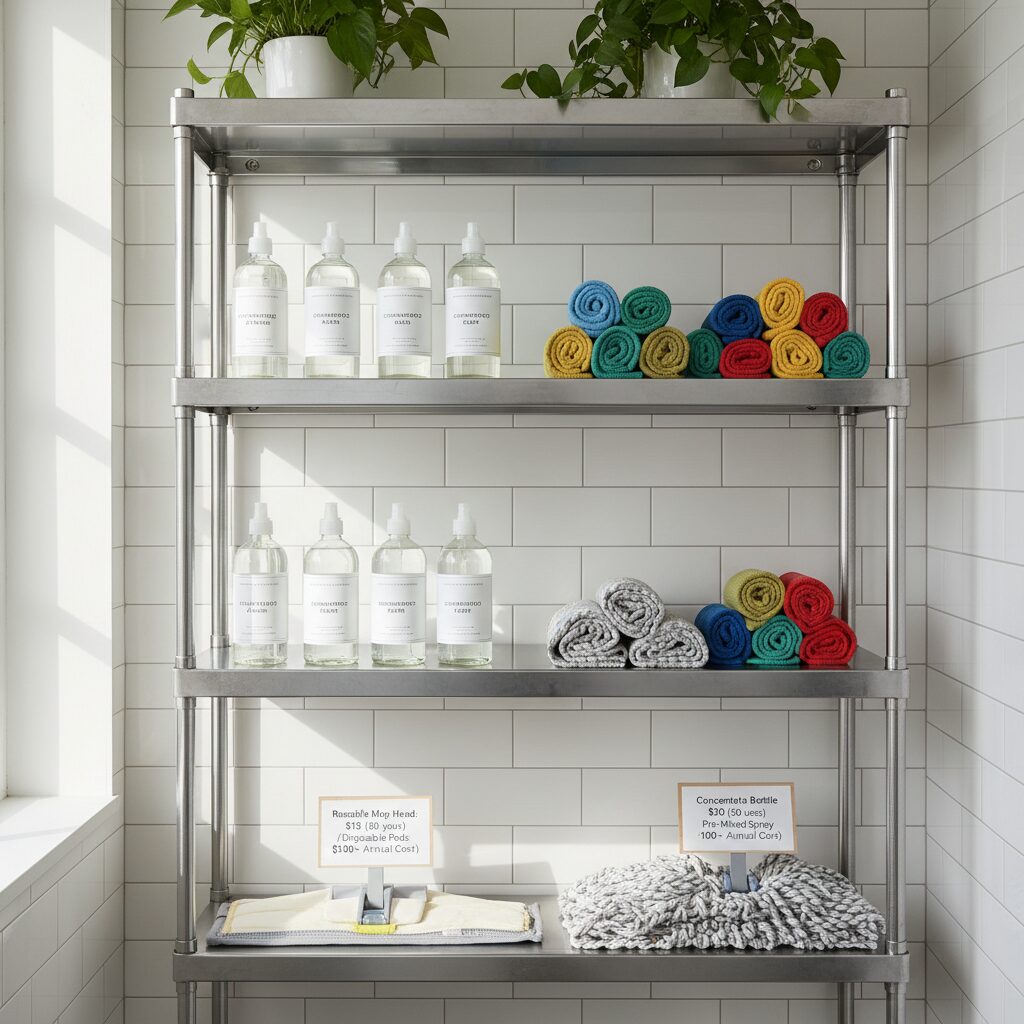
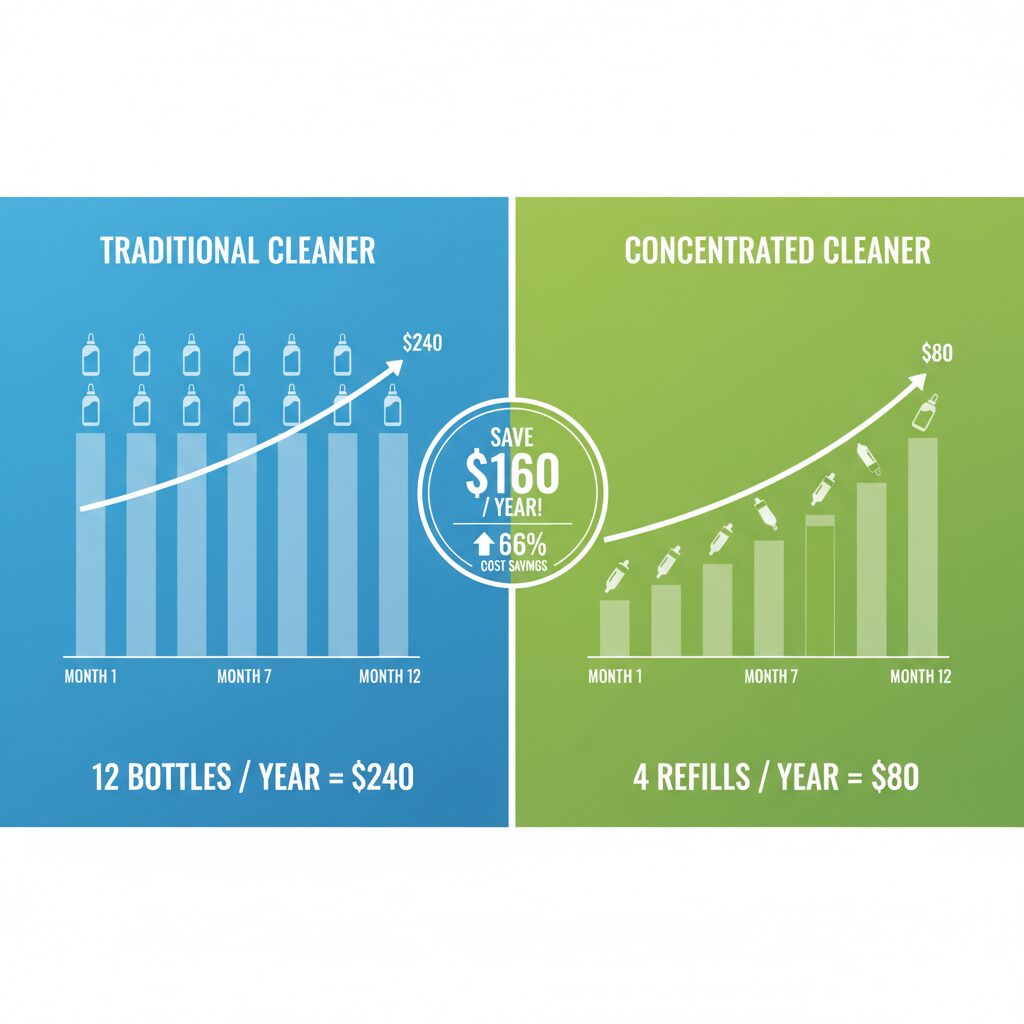
This is your biggest cost-saving opportunity. Traditional all-purpose cleaners are 80-90% water. You’re paying to ship and store water. Concentrated formulas change the equation entirely. Brands like ECOS and Simple Green offer concentrated versions that require dilution—meaning one bottle replaces four or five conventional bottles.
The math is compelling: A case of concentrated all-purpose cleaner costs roughly $30-$45 and yields 5-10 times the cleaning volume of standard bottles. For a small business with 3-5 employees, one case lasts 2-3 months. Compare that to conventional cleaners at $4-$6 per bottle, purchased weekly, and the annual savings exceed $300 just on this single product category.
Swap #2: Microfiber Cloths Instead of Disposable Wipes
Disinfectant wipes seem convenient, but they’re a recurring expense trap. A box of Clorox Wipes costs $8-$12 and lasts roughly one week in an active office. That’s $400-$600 annually for a consumable product that ends up in landfills.
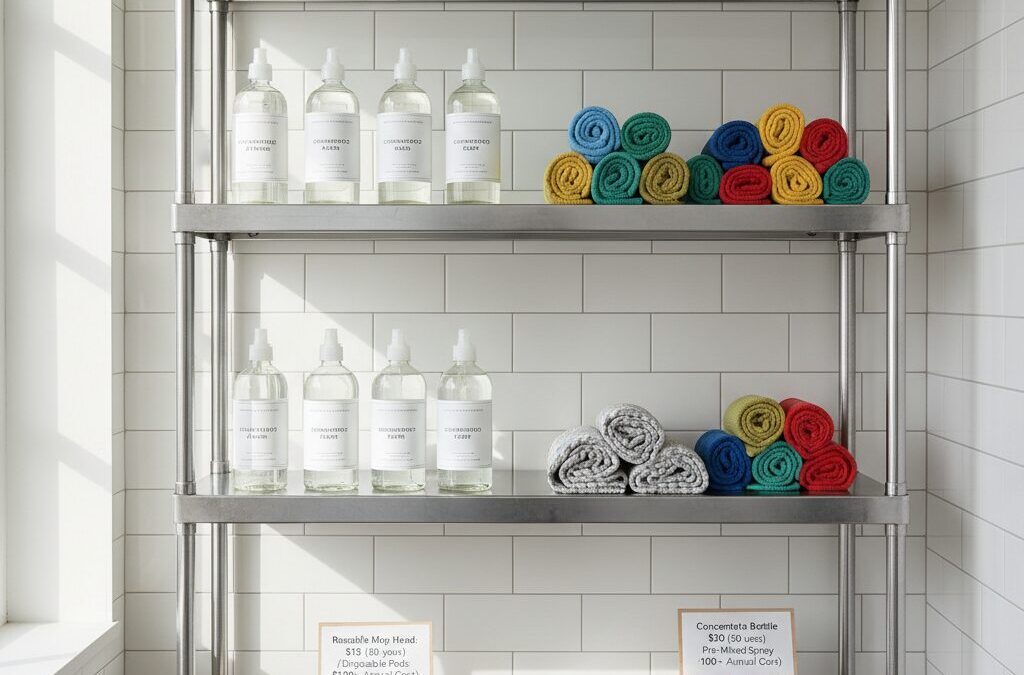
Multicolor microfiber cloths (color-coded by cleaning task) cost $15-$25 for a set of 12 and last 12+ months with proper care. One set replaces an entire year of wipe purchases. Pair them with your concentrated cleaner, and you’ve eliminated a major recurring expense while reducing waste. Train your team on the color system—blue for glass, yellow for general surfaces, red for bathrooms—and you’ve also improved cleaning consistency.
Swap #3: Plant-Based Wood and Furniture Cleaners
Method Daily Wood Cleaner or similar plant-based alternatives cost roughly $6-$8 per bottle and outperform traditional Lysol-based products. Method operates a LEED Platinum factory and focuses on sustainable sourcing. For businesses with wood furniture or paneling, this swap improves air quality (reducing respiratory irritation among staff) while costing only slightly more than conventional options.
Step 3: Negotiate Bulk Pricing and Supplier Partnerships
Once you’ve identified your core green products, approach your janitorial supplier with a proposal. Suppliers like Benjamin Office Supply increasingly offer discounts and rebate opportunities for businesses committing to sustainable product lines. Here’s your negotiation strategy:
- Request volume discounts: Commit to purchasing 3-6 months of concentrated cleaners upfront. Most suppliers offer 10-15% discounts for bulk orders.
- Ask about supplier sustainability programs: Many distributors now offer rebates for purchasing green-certified products or reducing packaging waste.
- Consolidate your supplier base: Instead of purchasing from multiple vendors, consolidate with one supplier offering comprehensive green lines. This simplifies ordering and typically unlocks better pricing.
- Explore refillable container programs: Leading janitorial suppliers now offer refillable containers for concentrated cleaners, reducing packaging costs and waste simultaneously.
The key message for your supplier: you’re committing to a sustainable transition and want to partner with them on the journey. Most will respond positively, especially given that 64% of consumers are willing to pay premium prices for eco-friendly products—meaning your clients increasingly expect this.
Step 4: Invest in Reusable Equipment (One-Time Cost)
While consumable products drive recurring costs, reusable cleaning equipment offers one-time investment with multi-year payoff. Budget $200-$400 for these items:
- Microfiber mop system: $40-$60 for handles and multiple reusable mop heads (replace disposable mop pads that cost $2-$3 each)
- Durable brushes and scrubbers: $20-$30 for a set that lasts 2+ years (versus monthly disposable brush purchases)
- Reusable cleaning rags: $15-$25 for a bulk pack of recycled-material rags
- Quality spray bottles: $25-$35 for commercial-grade bottles that won’t leak or degrade
These items reduce the frequency of consumable purchases dramatically. A reusable mop system pays for itself within 2-3 months compared to disposable alternatives.
Step 5: Phase in Specialized Products Strategically
Not all cleaning tasks require premium products. Prioritize green alternatives where they matter most:
Priority 1: High-Traffic Areas and Employee Spaces
Bathrooms, break rooms, and office areas where employees spend time benefit most from non-toxic disinfectants. Brands like Simple Green and ECOS offer effective disinfectants without ammonia or chlorine bleach—eliminating respiratory irritation and skin sensitivity. This reduces sick days and improves morale. The cost difference is minimal ($0.50-$1.00 more per application) compared to the productivity gains.
Priority 2: Client-Facing Spaces
Reception areas, conference rooms, and retail spaces should feature your sustainability commitment visibly. Using green cleaners here demonstrates your values to clients and prospects. This is where social proof matters—73% of consumers will pay premium prices for genuine sustainability, and they notice when businesses walk the walk.
Priority 3: Storage and Low-Traffic Areas
Basements, storage closets, and utility areas can continue using conventional products if budget is tight. Focus your green transition on spaces where employees and clients spend time.
Step 6: Measure, Track, and Communicate Results
After three months, pull your spending data again. Most businesses report 20%-30% cost reductions. Track additional metrics:
- Employee sick days (typically decrease 10-15%)
- Product repurchase frequency (should decrease with concentrates and reusables)
- Waste volume (measure by dumpster pickups or weight)
- Client feedback (survey clients on facility cleanliness and sustainability)
Share these results with your team and clients. This transparency builds credibility. When you can say “We’ve reduced our cleaning costs by 25% while eliminating 40% of our janitorial waste,” you’re demonstrating that sustainability and profitability align.
The Timeline: Realistic Expectations
Don’t attempt a complete overhaul overnight. A phased approach works better:
- Month 1: Implement concentrated cleaners and microfiber cloths (highest ROI)
- Month 2: Add plant-based specialty cleaners and reusable mop systems
- Month 3: Evaluate results and expand to remaining product categories
This gradual approach lets your team adjust to new products and processes while you track cost impact at each stage.
Why This Matters Right Now
The market is shifting rapidly. In 2026, sustainability has moved from “nice to have” to “must have” in commercial janitorial services. Energy-efficient equipment, water-conserving technologies, and smart sensors that trigger automatic reordering are becoming standard. Businesses that haven’t started their green transition are falling behind on both cost and competitive positioning.
The good news? You don’t need sophisticated technology or massive capital investment to start. You need a strategic plan, supplier partnerships, and commitment to phased implementation. This playbook gives you exactly that.

Your next step: Pull your last three months of janitorial invoices this week. Identify your top three spending categories. Then contact your supplier about concentrated versions of those products. That single conversation could save your business thousands annually while positioning you as a sustainability leader in your market.

Unlock Full Article
Watch a quick video to get instant access.

Social Media