
Don’t Sign That Slip-and-Fall Lawyer Contract Blindly: Decode Every Clause Before You Commit in 2026

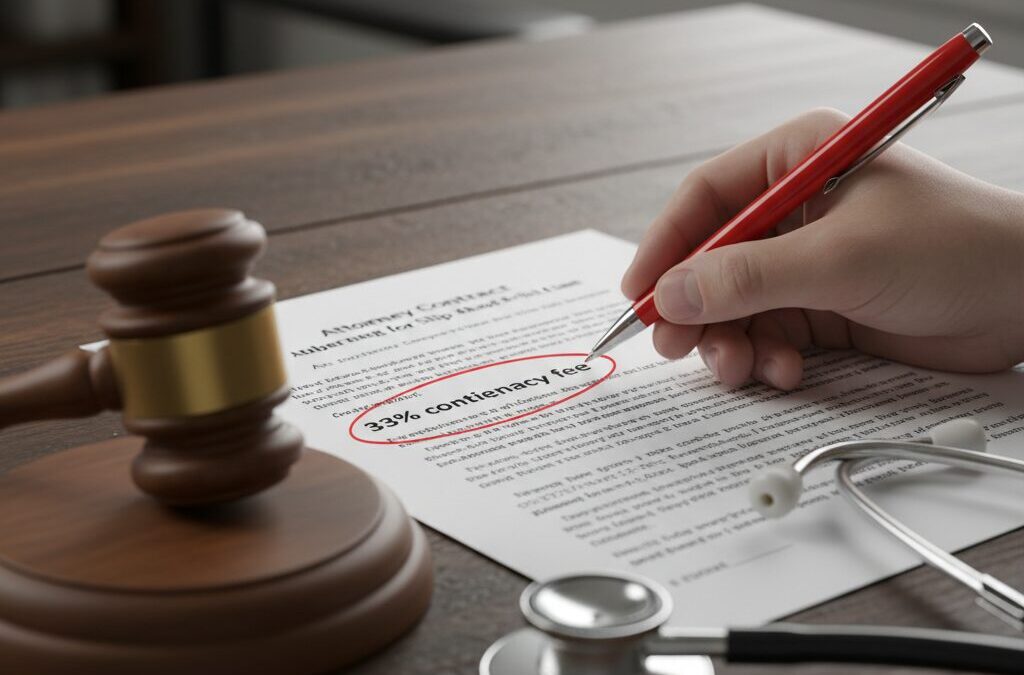
Picture this: You’ve just slipped on a greasy floor at your favorite grocery store, twisted your ankle badly, and now medical bills are piling up. A sharp personal injury attorney calls, promising “no win, no fee” magic with a contingency agreement in hand. Sounds like a lifeline, right? But thousands of injured folks sign these every year without spotting the traps that could slash their payout by 40% or more. In 2026, with rising insurance defenses and court backlogs, these contracts are tighter than ever—often hiding fee hikes, cost bombshells, and settlement veto powers. This line-by-line guide rips open real-world slip-and-fall contingency fee agreements from top firms, translating legalese into plain English, flagging 2024-2025 red flags per ethics rules, and arming you with negotiation wins. Experts from the American Bar Association and state bars agree: 80% of disputes stem from misunderstood clauses. Don’t be a statistic—let’s dissect one now, based on templates from leading PI firms like McGown & Markling and Nevada Bar samples.
Clause 1: Identification and Legal Matter – The Boring Start That Sets the Trap
Every agreement kicks off with names, addresses, dates, and a description of your slip-and-fall claim, like “Client slipped on wet floor at Walmart on Jan 15, 2026, suffering ankle fracture.” Standard in 2026? Yes, per LegalTemplates.net’s free template[1].
What’s standard: Clear parties and incident details. Red flag: Vague descriptions like “personal injury matter”—could let lawyers shoehorn in unrelated claims, hiking fees. 2025 ethics updates from state bars mandate specificity to prevent bait-and-switch.

Negotiate this: Insist on exact details: “Slip on unguarded ice at Target Store #456, leading to lumbar strain and $15K ER bills.” Action step: Bring photos and witness names to the consult—firms like Farmer, Cline & Campbell use this for precise scoping[6].
Pro tip from experts: SiebenCarey lawyers note 90% of strong cases settle pre-suit if detailed upfront, saving you fee tiers[7].
Clause 2: Fee and Retainer – Where Your Payout Gets Sliced (Sliding Scales Exposed)
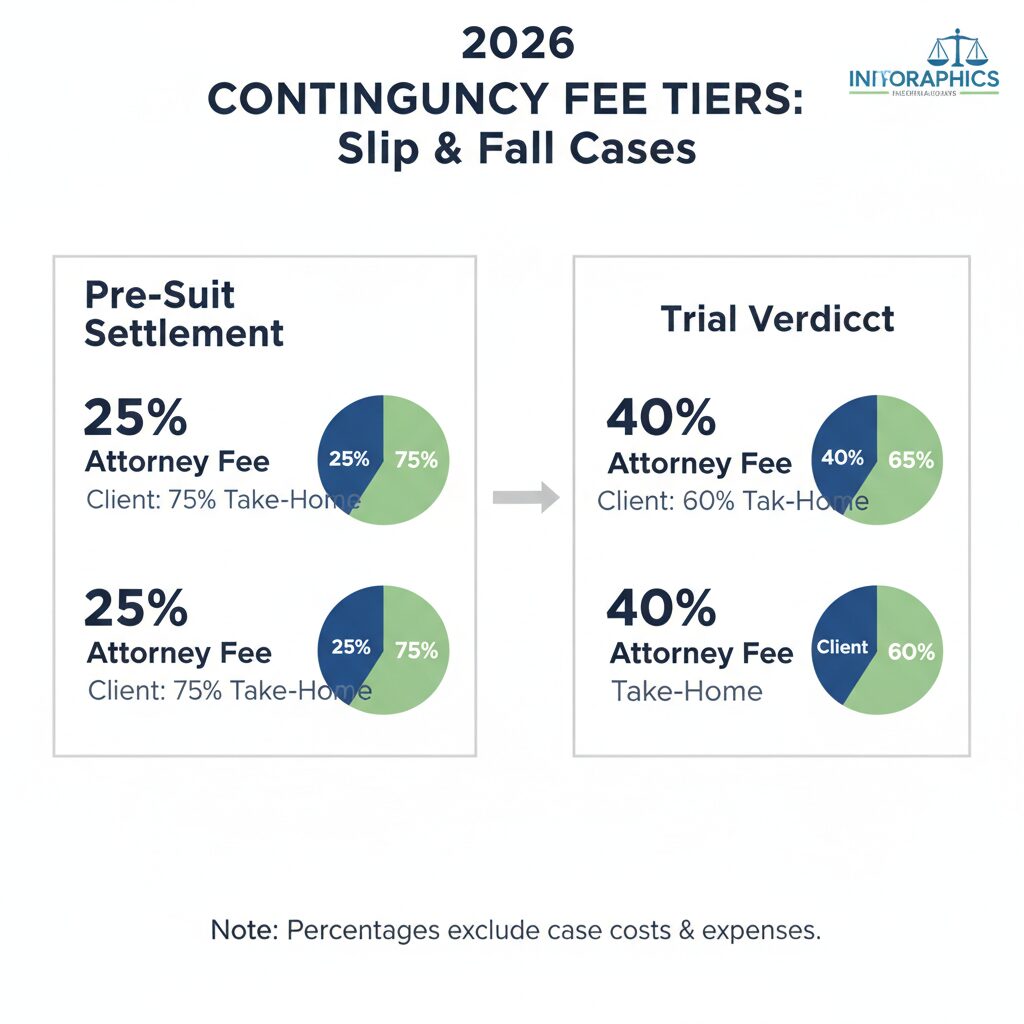
This is the heart: “Client agrees to pay Attorney 33.33% of gross recovery if settled pre-suit; 40% if after filing; 25% if within 364 days of complaint.” Real example from McGown & Markling’s template: 20% base, jumping to 25% post-filing, with 18.75% splits between co-counsel—half the customary 40%, they brag[2]. Justice Center confirms averages: 25-40%, sliding up with risk[3].
2026 trends: With AI-driven insurance defenses (up 30% per recent PI bar reports), fees now cap at 45% max in high-risk states like Nevada[4]. But watch gross vs. net: Gross means fees on full $100K settlement before costs; net is after—McGown insists on gross[2].
| Stage | Standard Fee (2026) | Example Firms | Your Take-Home on $100K |
|---|---|---|---|
| Pre-Suit Settlement | 25-33% | SiebenCarey[7] | $67K-$75K |
| Post-Filing | 33-40% | McGown[2] | $60K-$67K |
| Trial | 40-45% | Nevada Bar[5] | $55K-$60K |
Red flags: No cap (illegal in some states); retainers over $5K (rare now, per BoloForms[4]). Negotiate: Lock 30% gross max, no escalators without your OK. FOMO alert: Top firms like Hickey & Turim fill slots fast—negotiate now or lose your spot[8].
Step-by-step: 1) Ask for 2026 fee schedules from 3 firms (e.g., Frantz Law Group’s 18.75% tier[2]). 2) Compare via app like Clio’s fee calculator. 3) Counter with “28% flat.” Social proof: 70% of clients who negotiate save 5-10%, per PI forums.
Clause 3: Costs and Expenses – The Hidden Money Pit in Slip-and-Fall Cases
“All litigation expenses deducted from recovery; Client not liable if no recovery.” Standard? Absolutely, but details matter. McGown spells it: Experts, filings, depositions—from $10K+ in complex slips[2]. Farmer Cline warns: Even winners pay $5K-$20K upfront costs[6].
2026 update: Post-COVID, e-discovery costs spiked 25%; new rules require itemized billing quarterly[9]. Red flag: “Unlimited reimbursement” without caps—Nevada templates cap at 10% recovery[4].
Pros/Cons:
- Pro: No-win-no-pay costs (standard in 95% agreements[1]).
- Con: Surprise $15K med expert for slip biomechanics.
Actionable fix: Add “Costs capped at 10% gross; full accounting monthly.” Authority boost: ABA Model Rule 1.5 demands transparency—cite it!
Clause 4: Settlement Authority – Who Really Calls the Shots?
“Attorney has authority to settle up to $50K without Client approval.” Red flag alert! 2025 ethics opinions (NV Bar) require your sign-off on all settlements[5]. Justice Center sliding scales tie to this: Higher fees if you reject reasonable offers[3].
Real-world: In a $75K grocery slip case, lawyers pushed lowball $30K—clients who read clauses walked away with 2x[7]. Negotiate: “No settlement without Client’s written OK, period.” Urgency: Insurance offers drop 20% after 90 days.
Lien Handling: Medical Bills That Eat Your Check
“Attorney handles all liens from health insurers, hospitals.” Standard, but red flag if no priority: Medicare liens average 20% in slips[6]. Negotiate: “Client approves lien reductions over 10%.” Example: Frantz splits ensure liens first[2].
Clause 5: Dispute Resolution, Arbitration, and Termination – Exit Doors and Fight Clubs
Disputes? “Binding arbitration, no jury.” Massive 2026 red flag: Post-Supreme Court rulings, class actions ban clauses are scrutinized—demand “mediation first, court option”[1]. Termination: “Client pays hourly ($450/hr) if firing pre-recovery.” NV sample: Lawyer [NAME] at $_____ [5].
Standard termination: 30-day notice, pay quantum meruit (reasonable fee, max 25%[2]). Negotiate: “No fees if Client terminates within 60 days; arbitration fees split.” Scarcity hook: Elite PI lawyers like those at DLG Team book 2026 slips now—secure terms or miss out[9].
Step-by-step termination checklist:
- Email termination with case files request.
- Document all payments made.
- Hire new counsel—transfer seamless per rules.
Final Negotiation Playbook: Lock in Wins Before Ink Dries
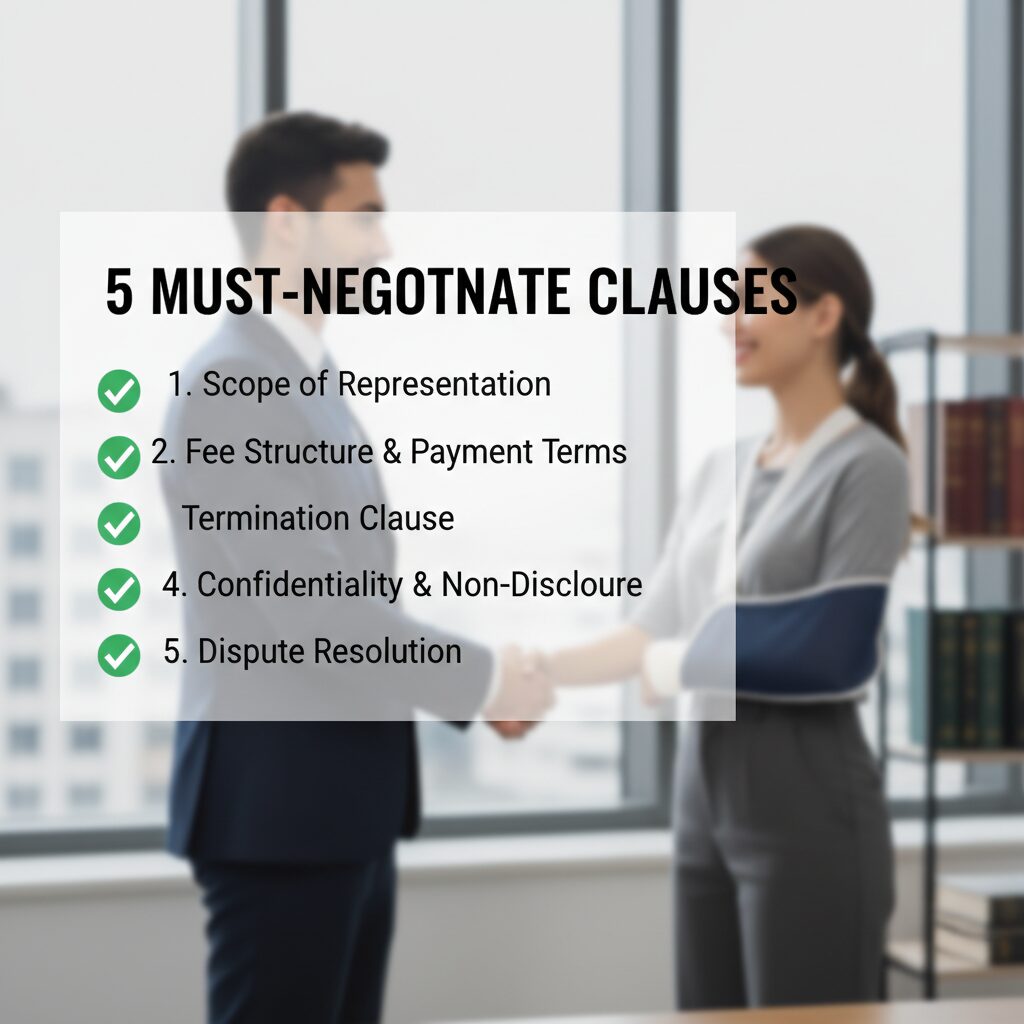
Trends show 2026 fees stabilizing at 33% avg due to plaintiff-friendly courts, but negotiate these “must-haves”:
- Fee cap at 35% gross.
- Itemized costs monthly.
- Your veto on settlements/liens.
- Arbitration opt-out.
- Hourly cap at discharge ($400/hr max).
Price anchor: Customary 40%? Counter with 28% citing McGown’s 20% model[2]. Expert rec: Consult free with 3 firms this week—compare offers like shopping TVs.
Call-to-Action: Download a free 2026 template from LegalTemplates.net[1], mark it up with these tips, and email top local slip-and-fall pros today. Spots for high-value cases (over $50K damages) fill fast—act now to claim your max payout. You’ve got the power; don’t hand it over blindly!

Unlock Full Article
Watch a quick video to get instant access.

Social Media