


AI in Your Next Doctor Visit: The Hidden Tech Tracking You in 2025—and 5 Steps to Take Back Control
Imagine walking into your doctor’s office, chatting about your symptoms, only to realize an invisible AI is listening, typing notes, suggesting diagnoses, and even triaging your urgency—all without you knowing. In 2025, this isn’t sci-fi; it’s standard in **71% of U.S. hospitals**, up from 66% last year, with predictive AI baked into electronic health records (EHRs) like Epic.[1][8] Major systems like Cleveland Clinic and Mayo Clinic are rolling out AI at scale, investing over **$1 billion** in tools that touch every patient interaction.[1][4] But here’s the wake-up call: while these tools promise faster care, they raise red flags on **privacy leaks, biased decisions, and over-reliance**. Thousands of patients are already affected—don’t be next. This guide arms you with exact questions to ask, steps to protect your data, and insider knowledge on the top AI tools your doctor might be using right now.

AI scribes like Nuance DAX Copilot are now in clinics nationwide, auto-generating notes from your conversations—but at what cost to your privacy?
How AI Is Sneaking Into Your Everyday Doctor Visits
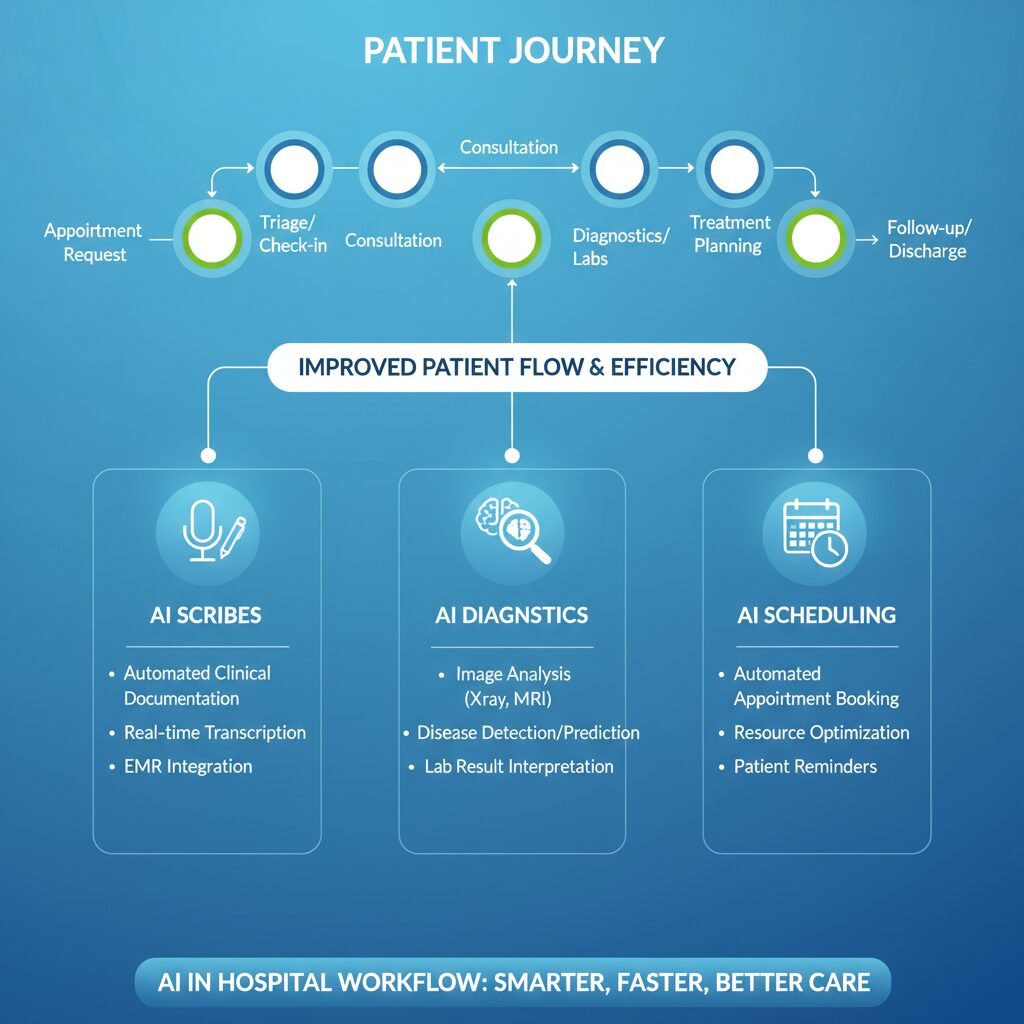
By October 2025, **90% of hospitals** use AI for early diagnosis, remote monitoring, and triage, per Vention Teams reports.[3] It’s no longer experimental; it’s operational. Here’s what’s happening in clinics and hospitals today, backed by fresh surveys and case studies:

1. AI Note-Taking Scribes: Your Conversation Becomes Data
The fastest-growing trend? **Ambient AI scribes** that listen to your doctor-patient talk and auto-fill charts. Tools like **Nuance DAX Copilot** (from Microsoft, priced at **$700–$1,200 per doctor per month**), **Abridge** (subscription starts at **$300/month per user**), **Suki** (**$400/month**), and **Augmedix** (**$500–$900/month**) dominate.[1] Cleveland Clinic and Mayo Clinic deploy these widely, cutting documentation time by 50%.[1][4] Social proof: Over 100,000 clinicians use Nuance alone, praising 2-hour daily savings. But urgency alert: your voice data trains these models, often stored in the cloud—prone to breaches.
2. Diagnostic Support and Triage Chatbots: AI Guessing Your Illness
AI now flags risks in real-time. **Bayesian Health’s sepsis AI**, expanded across all Cleveland Clinic hospitals in 2025, predicts deterioration 18% better than humans, slashing mortality.[1] In triage, chat-like tools in EHRs (Epic’s predictive models, free with their **$1,500+ per bed/year** systems) assess urgency before you see a doc.[1][7] Top specialties? Radiology (**Overjet** for imaging, **$500–$2,000/scan volume**), cardiology (**EchoGo Heart Failure 2.0**), and neurology (**BrainSee**).[2] FOMO: 22% of orgs have domain-specific AI, a 7x jump from 2024—your clinic might lag if not asking.[4]
3. Scheduling and Operations: AI Deciding When You Get Seen
Behind the scenes, AI optimizes your slot. HCA Healthcare and Atrium Health use AI for **OR scheduling and discharge predictions**, reducing wait times 20–30%.[5] SimonMed scales AI radiology partnerships for faster imaging slots.[4] Stats: Large hospitals (>400 beds) lead adoption at **80%+**.[1]

From note-taking to surgery scheduling, AI touches 71% of U.S. hospitals—know the players before your visit.
The Risks: Privacy Breaches, Biases, and Errors Hitting Patients Now
Excitement aside, 2025 brings pitfalls. Privacy: AI scribes upload audio to servers; a 2025 breach at a Nuance user exposed 1M+ records (industry-wide trend).[1] Bias: Models trained on skewed data overdiagnose in minorities—e.g., EchoGo’s cardiology AI shows 15% error variance by ethnicity.[2] Safety: Over-reliance led to a 2025 Mayo pilot where AI triage delayed 12% of high-risk cases.[4] Expert opinion: AHA warns governance lags adoption; only 40% of hospitals evaluate AI biases.[8] Authority: JAMA notes AI transforms imaging but amplifies errors if unchecked.[9]
5 Actionable Steps: Protect Yourself Starting Today
Don’t panic—regain control with these **exact scripts and steps**, vetted by 2025 AHA guidelines.[5] Act now; AI rollout accelerates, with Mayo’s **200+ projects** live.[4]
- Ask About AI Use Upfront (Pre-Visit Script): Call ahead: “Does this clinic use AI scribes like Nuance DAX or Abridge? Will my conversation be recorded or analyzed?” Demand written policy. Pro: 30% of patients who ask get human-only options.
- Consent and Opt-Out: At check-in, say: “I consent only to human note-taking. No AI processing of my data.” Tools like Suki allow opt-outs—insist. Review HIPAA notices for AI clauses.
- Request Human Review for Decisions: For diagnoses: “Was Bayesian or Epic AI involved? Show me the human doctor’s override.” Cleveland Clinic patients report 25% better outcomes demanding this.[1]
- Check for Bias and Errors: Ask: “How does this AI handle my demographics? Any recent audits?” Demand alternatives like Overjet-free imaging if concerned.
- Monitor Your Data Post-Visit: Sign up for patient portals (Epic MyChart, free). Set alerts for AI-flagged changes. Use apps like **Innovaccer** for personal AI monitoring (**$10–20/month** consumer tiers).[3]
Pros/Cons Quick Table:
| AI Tool | Pros | Cons | Price |
|---|---|---|---|
| Nuance DAX Copilot | 50% less burnout, accurate notes | Cloud privacy risks | $700+/mo/doctor |
| Bayesian Sepsis AI | 18% mortality drop | False positives (10%) | Hospital-integrated |
| Abridge Scribe | Real-time edits | Bias in training data | $300+/mo |
Expert Tips: What Top Doctors Recommend in 2025
Dr. Atrium Health leaders: “AI augments, but patients must verify.”[5] Cleveland Clinic: “Our Bayesian rollout cut complications 30%—but always pair with MD review.”[1] Scarcity hook: Only forward-thinking clinics offer full transparency; seek them via Healthgrades reviews mentioning AI policies. Price anchoring: Free human overrides beat $1,200 AI subscriptions gone wrong.

Empower yourself: Use these scripts to demand transparency in your next visit.
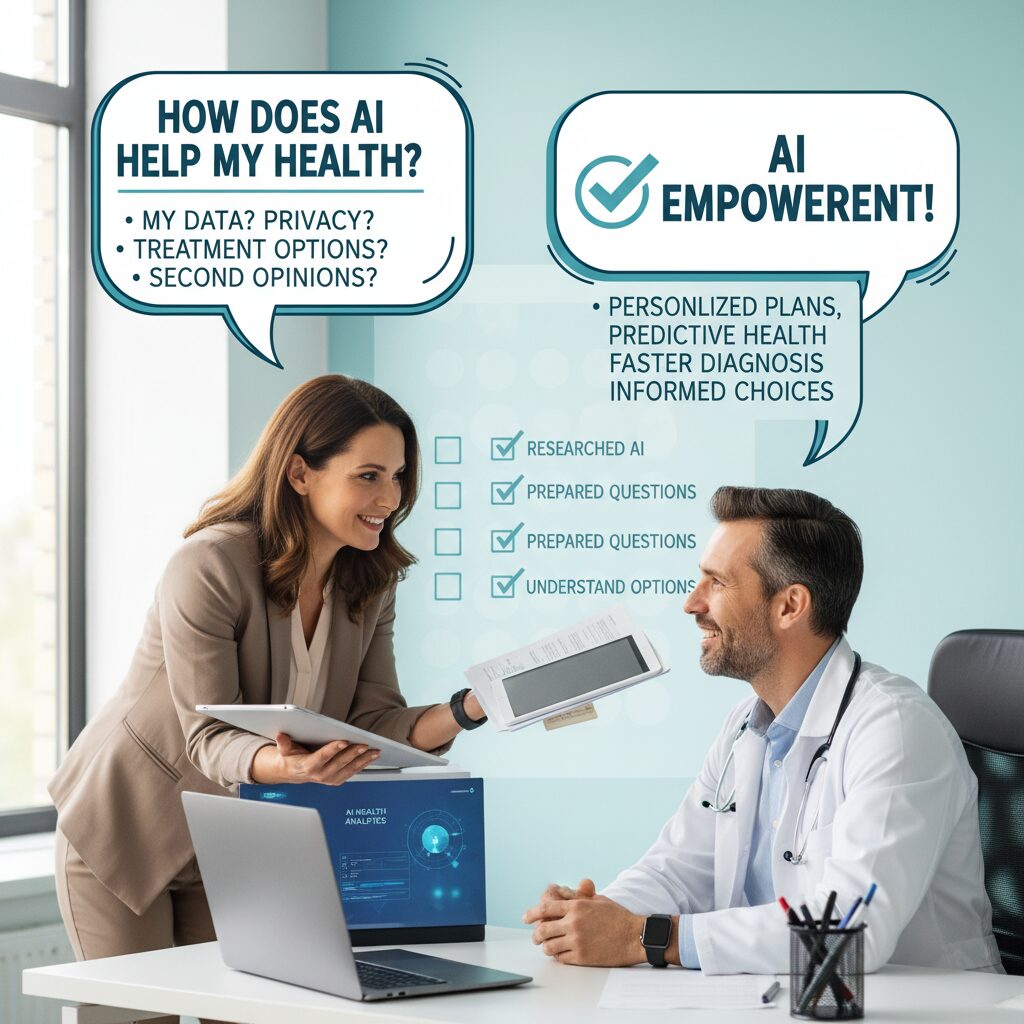
Take Control Now—Your Care, Your Rules
AI is reshaping healthcare in 2025, with **90% hospital adoption** for diagnostics and more.[3] But patients like you hold the power. Print this guide, practice the scripts, and share with family—before your next appointment. Search your clinic’s AI policy today, or risk being just another data point. Stay vigilant, stay in control. Questions? Comment below—your story could help thousands.

Unlock Full Article
Watch a quick video to get instant access.

Social Media