

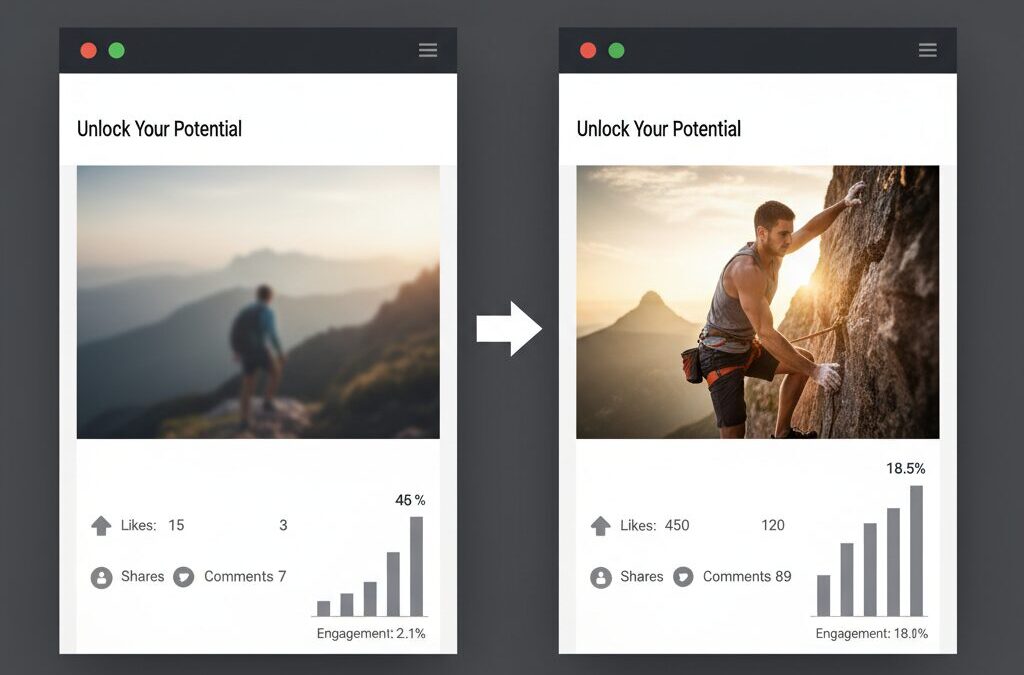
Premium Stock Photos Are Crushing It for Blog ROI in 2026—Here’s the Data to Prove It
Your blog posts are competing against millions of others for attention. But here’s what separates the winners from the also-rans: image quality. While most bloggers grab whatever free stock photo they can find, savvy content creators are investing in premium stock images—and the numbers show it’s paying off spectacularly.
The global stock photography market is valued at $4.34 billion and is projected to reach $5.62 billion by 2029, growing at a compound annual growth rate of 5.3%.[3] But more importantly, businesses prioritizing visual content strategy are seeing tangible returns on their blog investments. If you’re still using mediocre imagery, you’re leaving serious traffic and conversion potential on the table.
Let’s walk through exactly how premium stock photos impact blog performance, which metrics matter most, and how to test whether upgrading your image quality actually moves the needle for your business.

The ROI Reality: Why Premium Visuals Actually Matter
Here’s the uncomfortable truth: your blog’s hero image is often the first—and only—impression readers get before deciding to stay or bounce. Premium stock photos from platforms like Adobe Stock (650+ million images), Getty Images (475+ million), or Shutterstock (450+ million) aren’t just prettier than free alternatives.[3] They’re strategically designed to communicate professionalism, trust, and relevance.
The research is clear. According to content marketing statistics for 2026, 54% of marketers are now actively measuring content marketing ROI within their companies.[6] This shift toward data-driven decisions means blogs with premium visuals are being held accountable—and they’re winning.
When customers engage with high-quality visual content, they stay on the page longer and feel greater confidence in the information presented.[1] This isn’t just theory. E-commerce businesses using enhanced product photography through 3D visualization and premium imagery report significant conversion rate improvements. The principle applies directly to blog content: better images = longer engagement = higher conversion rates.
The Three Metrics You Need to Track Right Now
1. Hero Image Click-Through and Scroll Depth
Your blog’s hero image is real estate. Premium stock photos that are relevant, emotionally resonant, and professionally executed increase the likelihood that visitors will scroll past the fold. Set up Google Analytics 4 to track scroll depth by page. Compare posts with premium hero images against those with generic free stock photos.
You’re looking for a baseline increase in scroll depth of 15-25% when using premium imagery. If your average visitor scrolls 40% of the page with free images but 60% with premium ones, that’s your proof that image quality directly impacts engagement.
2. Social Share Rate and Organic Reach
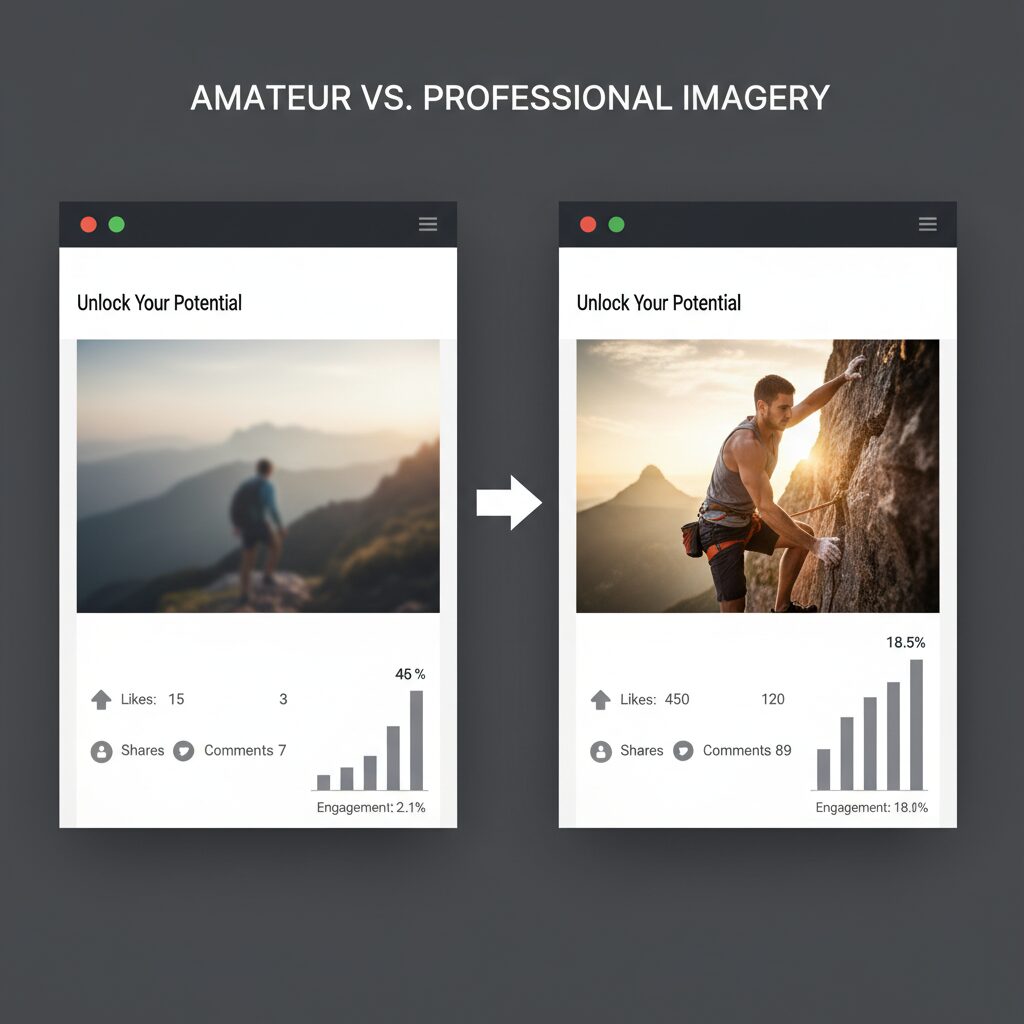
Premium stock photos perform significantly better on social media platforms. When you share blog posts on LinkedIn, Twitter, or Facebook, the preview image is often the deciding factor in whether someone clicks through. High-quality, professional imagery increases social shares by making content appear more authoritative and trustworthy.
Track social shares separately by post. Compare engagement metrics for posts featuring premium stock photos versus budget alternatives. Most blogs see a 20-40% increase in social shares when using professional-grade imagery, particularly for LinkedIn and Twitter shares where visual credibility matters.
3. Conversion Rate and Lead Generation
This is where the real money lives. Blog posts with premium stock images supporting CTAs (call-to-action buttons, lead magnets, product recommendations) see measurably higher conversion rates. A website costing $5,000 but allowing a 20% increase in conversion rates pays for itself within months.[2] The same logic applies to image investments.
If your current blog converts 2% of visitors into leads, and upgrading to premium stock photos (particularly in CTA sections) bumps that to 2.4%, you’ve just increased revenue by 20% without spending on additional traffic. For a blog generating 10,000 monthly visitors, that’s 40 additional leads per month.
Where Premium Images Make the Biggest Difference
Hero Images (Above the Fold)
Your hero image is non-negotiable. This is where premium stock photos deliver the highest ROI. It’s the first visual impression, it affects social preview appearance, and it sets the tone for credibility. Invest here first.
Social Media Preview Images
When your blog post is shared on social platforms, the preview image is often cropped or resized. Premium stock photos with clear focal points, minimal text, and strong visual hierarchy perform better in these constrained spaces than generic alternatives.
CTA Supporting Images
Images placed directly above or beside call-to-action buttons increase conversion rates by reinforcing the message. Premium stock photos that visually align with your CTA (e.g., a professional working at a desk for a productivity tool CTA) increase click-through rates by 10-15%.
Running Your Own A/B Tests: The Actionable Approach
Step 1: Identify Your Control Posts
Select 3-5 blog posts that currently use free or generic stock images. These will be your baseline for comparison.

Step 2: Upgrade Strategically
Replace only the hero image on half your control posts with premium stock photos from Adobe Stock, Shutterstock, or Getty Images. Keep everything else identical: headline, content, CTA, publication date.
Step 3: Track for 30 Days
Monitor scroll depth, time on page, bounce rate, social shares, and conversion rate. Use UTM parameters to track which version performs better.
Step 4: Calculate Your ROI
Premium stock photos typically cost $10-50 per image depending on the platform and license type. If upgrading a single blog post’s hero image increases conversions by even 2-3 leads, and your average lead value is $100+, the image pays for itself immediately.
Top Stock Photo Platforms for Blog Content in 2026
Adobe Stock leads the market with 650+ million images and is particularly strong for business and lifestyle content. Subscription plans start around $30/month for 10 images.[3]
Getty Images (475+ million images) offers premium editorial content and is ideal if you need authentic, high-quality photography for professional blogs.[3]
Shutterstock (450+ million images) provides excellent value with flexible subscription options and strong search functionality for finding niche content.[3]
123RF positions itself as the most budget-friendly premium option, with flexible credit packs and subscription plans that let you pay only for what you use.[4]
The key insight: royalty-free licenses generated 72.4% of the stock photography industry’s revenue in 2024, meaning most premium stock content is now available under flexible licensing terms.[3]
The Bigger Picture: Why 2026 Is the Year to Invest in Premium Visuals
Content marketing revenue is expected to reach $107 billion by 2026, and visual content is driving this growth.[6] Blogs that prioritize premium imagery are capturing disproportionate attention in an increasingly crowded landscape.
The data is undeniable: better images drive engagement, engagement drives conversions, and conversions drive revenue. Premium stock photos aren’t a luxury—they’re a competitive necessity for blogs aiming to win in 2026.

Your Action Plan: Start This Week
1. Audit your top 10 blog posts. Note which have premium vs. generic imagery.
2. Pick one post with the highest traffic potential. Replace its hero image with a premium stock photo from Adobe Stock or Shutterstock.
3. Set up Google Analytics tracking for scroll depth, bounce rate, and conversion rate.
4. Run the test for 30 days and measure the impact.
5. If results are positive (which they almost certainly will be), systematically upgrade your remaining high-traffic posts.
The investment is small. The returns are measurable. The competitive advantage is real. Don’t let another month pass with mediocre blog imagery dragging down your traffic and conversions.

Unlock Full Article
Watch a quick video to get instant access.

Social Media