

From Pretty Words to Profit: A 7-Step Framework for Website Copywriting Services That Sell
Your website copy isn’t just decoration. It’s a revenue machine that either works for you or works against you. In 2026, the difference between generic website copy and strategic, conversion-focused copy is measurable: optimized content delivers 2.6 times more clicks than standard copy, according to industry data. Yet most businesses still treat their website like a digital brochure instead of a sales asset.
The stakes have never been higher. Today’s B2B and B2C buyers are informed, skeptical, and time-pressed. They’re comparing options across multiple platforms, evaluating dozens of competitors, and making high-stakes purchasing decisions based partly on the clarity and authority of your messaging. If your website copy doesn’t immediately address their specific pain points and demonstrate clear value, they’re gone—clicking to your competitor’s site in seconds.
This is where professional website copywriting services prove their worth. Not because they use fancy words, but because they apply a proven framework that transforms vague value propositions into persuasive, profit-driving messaging. Let’s walk through that framework.

Step 1: Deep Audience Research and Persona Development
Before writing a single word, you need to understand who you’re selling to—not as a demographic, but as a person with specific daily challenges, job responsibilities, and decision-making pressures.
Effective website copywriting services start here. They conduct stakeholder mapping to identify all decision-makers and influencers in your buying process. A technical buyer might prioritize product features and integration capabilities, while a C-suite executive cares primarily about ROI and time-to-value. Your website copy must speak to both.
Create detailed personas that include:
- Job title and daily responsibilities
- Primary pain points and frustrations
- Success metrics they’re measured against
- Objections they commonly raise
- Where they consume information (LinkedIn, industry publications, webinars)
This isn’t guesswork. Top copywriting services interview your existing customers, analyze support tickets, and study competitor reviews to uncover the language your buyers actually use. This research becomes the foundation for every word that follows.
Step 2: Map Your Copy to the Buyer Journey
Your website doesn’t exist in isolation. It’s one touchpoint in a longer buyer journey that typically includes awareness, consideration, and decision stages. Your copy must match where each visitor is in that journey.
At the top of the funnel (awareness stage), visitors need educational content that clarifies their problems. They’re not ready to hear about your product yet—they’re trying to understand if they have a problem worth solving. Your website copy here should feature educational blog posts, explainer videos, and problem-identification content.
In the middle of the funnel (consideration stage), buyers are actively exploring solutions. Now your copy shifts to solution-oriented messaging. Comparison guides, feature breakdowns, and detailed service descriptions become critical. This is where many businesses fail: they jump straight to sales language instead of helping prospects evaluate their options.
At the bottom of the funnel (decision stage), late-stage buyers need proof. Case studies showcasing real results, customer testimonials, and detailed ROI calculators become your most powerful assets. This is where conversion-focused copy drives the final decision.
Step 3: Craft Your Positioning and Value Proposition
Your positioning is the single most important element of your website copy. It’s the answer to: “Why should I choose you instead of your competitors?”
In 2026, positioning has shifted from product-centric pitches to value-driven, solution-focused storytelling. Buyers don’t want features—they want to understand real-world impact and how your solution solves their specific problem better than alternatives.
Professional website copywriting services use frameworks like StoryBrand or the 4Ps (Picture, Promise, Proof, Push) to structure this positioning:
- Picture: Paint a clear image of the customer’s current frustration or desired future state
- Promise: Make an explicit promise about what your solution delivers
- Proof: Back it up with data, case studies, or expert validation
- Push: Create a clear next step (demo, consultation, trial)
Your positioning should be specific enough to exclude wrong-fit customers and compelling enough to attract ideal ones. Generic positioning (“We deliver quality solutions”) converts nobody. Specific positioning (“We help SaaS companies reduce customer churn by 40% in 90 days”) converts ideal customers.
Step 4: Structure Your Offer and Messaging Hierarchy
Your website copy needs a clear hierarchy of messages. What’s the primary benefit? What are secondary benefits? What objections do you need to overcome?


Professional copywriting services organize this using omnichannel strategies that ensure consistency across all touchpoints—your homepage, landing pages, email sequences, and social media. A comprehensive white paper might be repurposed into a multi-part email series, LinkedIn articles, and social posts, maximizing your content investment while maintaining brand coherence.
Your offer structure should follow this pattern:
- Headline that immediately addresses a specific pain point or desire
- Subheading that clarifies who this is for and what they’ll get
- Problem statement that resonates emotionally
- Solution introduction with key differentiators
- Proof through data, testimonials, or case studies
- Clear call-to-action with low friction
Step 5: Build Authority Through E-E-A-T and Trust Signals
Google’s E-E-A-T framework—Expertise, Experience, Authoritativeness, and Trustworthiness—plays a pivotal role in both SEO and conversion rates. B2B and B2C buyers alike are discerning; they seek content that demonstrates deep knowledge and reliability.
Incorporate trust signals throughout your website:
- Industry statistics and research data
- Customer testimonials and case studies with specific results
- Expert credentials and certifications
- Published thought leadership (articles, reports, webinars)
- Third-party validation (awards, partnerships, media mentions)
Readability is equally critical. Use short sentences, active voice, and logical flow. Tools like Hemingway Editor help simplify complex language without losing technical accuracy. Your copy should be scannable—bold key phrases, use subheadings, break up long paragraphs.
Step 6: Address Objections and Overcome Skepticism
Your website visitors are skeptical. They’ve been burned before, they’re comparing you to competitors, and they have legitimate concerns about whether your solution actually works.
Professional website copywriting services proactively address these objections in your copy. Common objections include:
- “How is this different from what we’re already using?”
- “Can we afford this?”
- “Will this actually work for our specific situation?”
- “What if it doesn’t work out?”
Answer these objections directly in your copy. Use FAQ sections, comparison charts, and risk-reversal guarantees (like money-back guarantees or free trials) to reduce perceived risk. This shifts the conversation from “Should we try this?” to “When should we start?”
Step 7: Test, Measure, and Optimize
The final step is continuous improvement. Your website copy isn’t static—it’s a living asset that should evolve based on performance data.
Track metrics that matter:
- Click-through rates on CTAs
- Conversion rates by page
- Time on page and scroll depth
- Lead quality (not just quantity)
- Cost per qualified lead
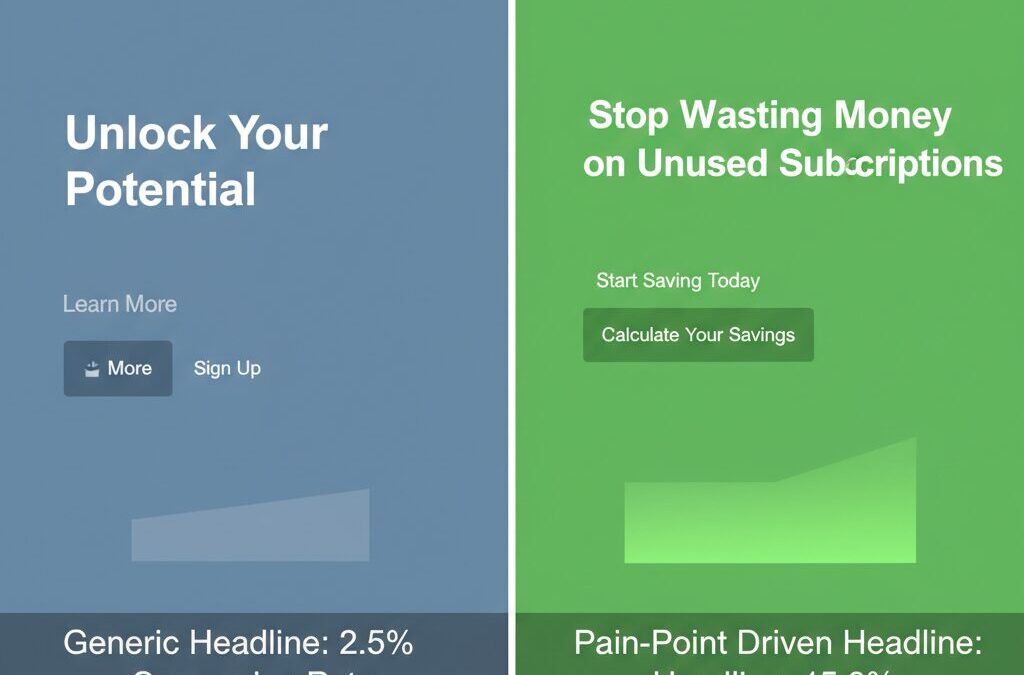
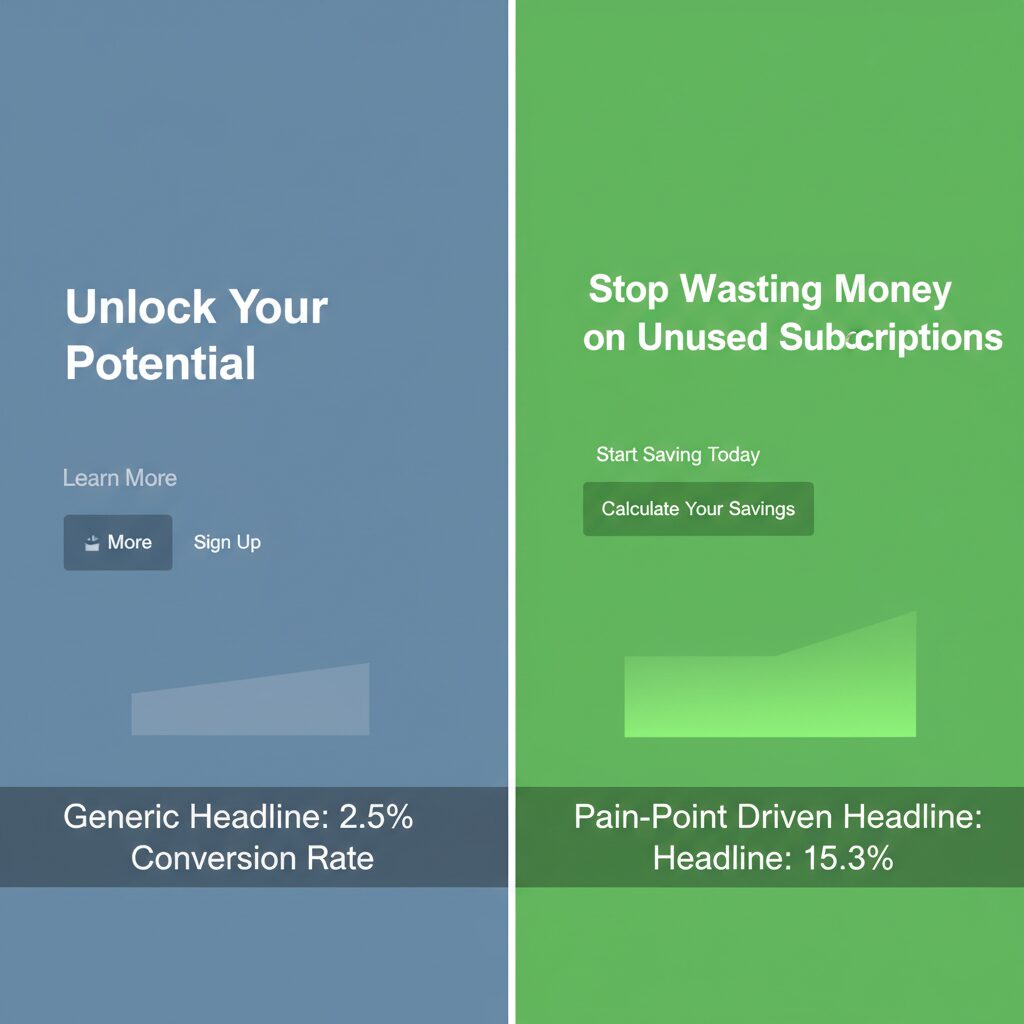
Run A/B tests on headlines, value propositions, social proof elements, and CTAs. Small copy improvements—changing a headline or reframing a benefit—can increase conversions by 20-50%.
Why Professional Website Copywriting Services Matter
You could attempt this framework yourself. But here’s what professional copywriting services bring: they understand buyer psychology, they know which messaging frameworks work for different industries, they have templates and proven formulas, and they can execute this entire process faster than learning it from scratch.
In 2026, copywriting is the new superpower. It’s not about flowery language—it’s about positioning, clarity, and persuasion. It’s about traffic that converts, not traffic volume. It’s about every click having purpose.
Your website copy either works for you or against you. The question is: which will yours be?

Unlock Full Article
Watch a quick video to get instant access.

Social Media