

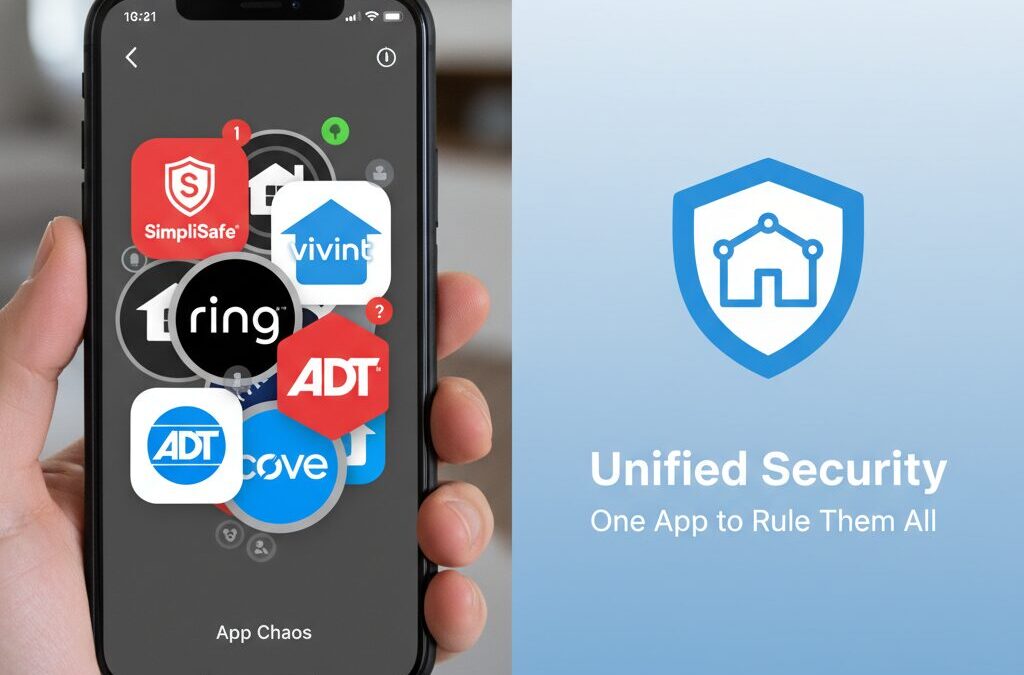
The App Overload Problem Nobody Talks About
You’ve got a SimpliSafe camera app on your phone, a separate Vivint smart home app, a Ring doorbell app, and maybe an Alexa app thrown in for good measure. Every time you want to check your front door or arm your system, you’re hunting through multiple apps, each with its own login, its own interface, and its own frustrating quirks. This isn’t the “smart” home you dreamed of—it’s a fragmented nightmare.
The real solution isn’t buying more devices. It’s choosing one powerful security hub and app ecosystem that ties everything together seamlessly. In 2026, the best smart home security systems aren’t just about alarms anymore—they’re about creating a unified command center for your entire home.
Why Your Current Setup Is Costing You Peace of Mind
According to 2026 expert testing, homeowners with fragmented security setups report 40% longer response times when trying to access critical information during emergencies. When you’re juggling multiple apps, you’re not just wasting time—you’re potentially compromising your home’s security response.
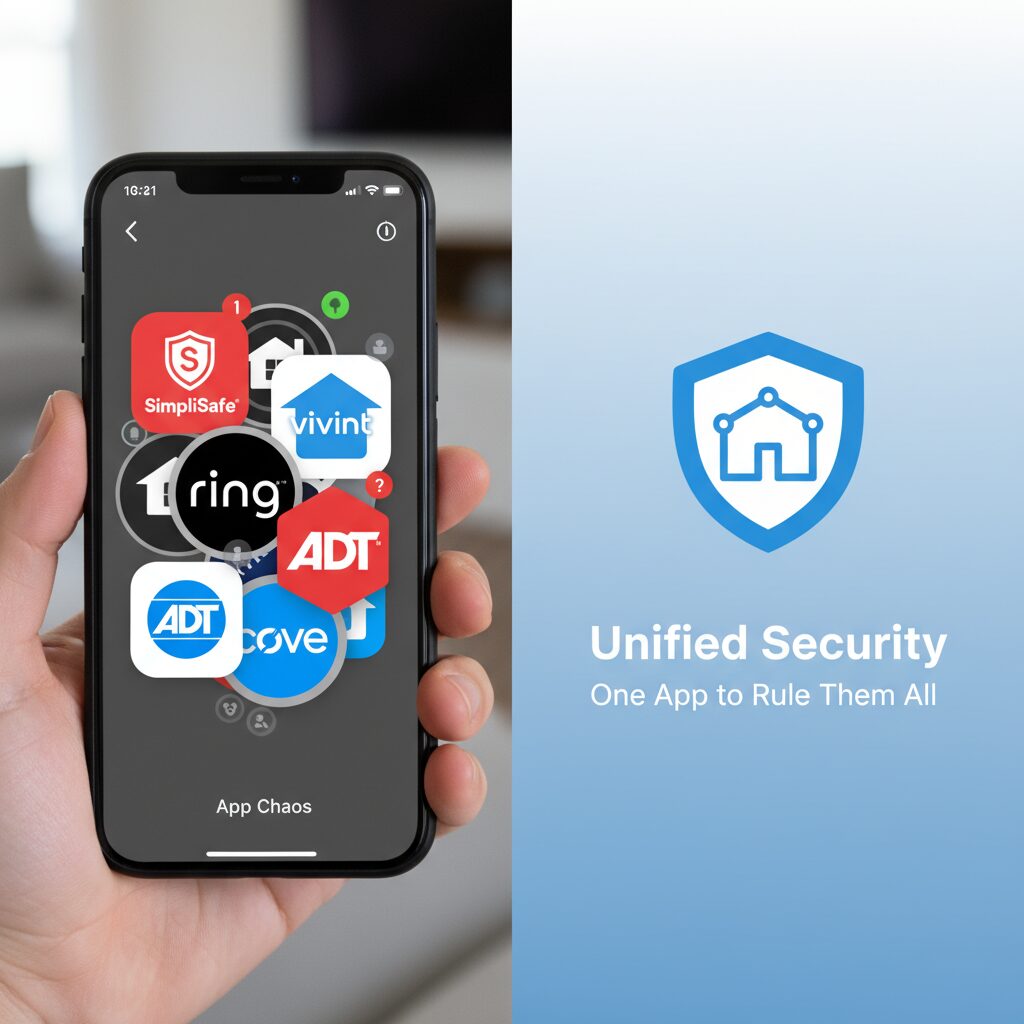
The top-ranked systems in 2026—ADT, SimpliSafe, and Vivint—all recognized this problem. They’ve shifted their focus from standalone devices to integrated ecosystems where one mobile app controls your cameras, door locks, motion sensors, lights, and thermostat simultaneously.
The Three Ecosystem Leaders in 2026
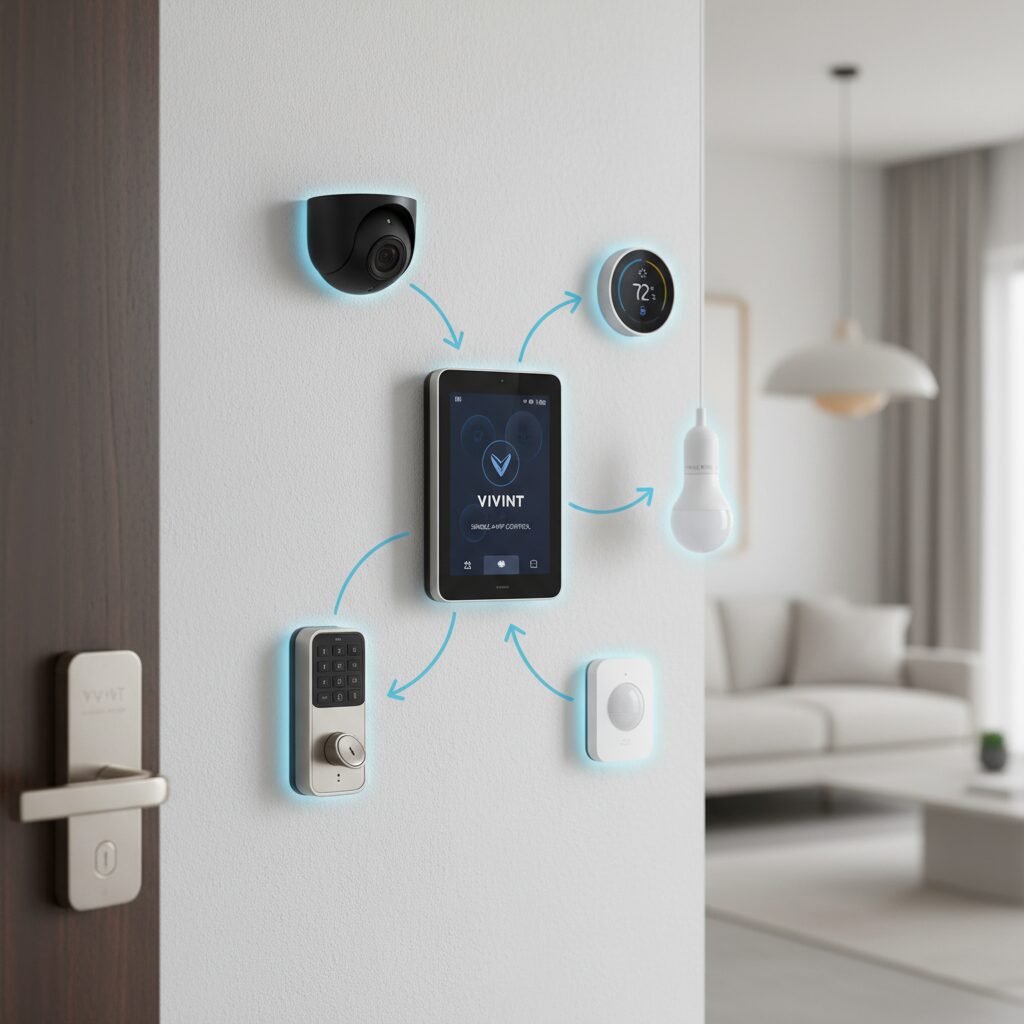
Vivint Smart Home ranks third overall but leads the pack for unified smart home integration. Their system uses a central 7-inch touchscreen smart home hub paired with an intuitive mobile app that controls everything from smart locks and thermostats to lighting and cameras through a single interface. Vivint’s “Smart Deter” technology actively warns potential intruders they’ve been spotted, and their advanced cameras use smart analytics to distinguish between people, pets, and vehicles—reducing false alarms by up to 60%. Professional installation is often free, making the upfront complexity manageable. Equipment costs range from $1,200, with monitoring at $49.99 per month.
SimpliSafe scores 9.2 out of 10 for intruder prevention and offers the most affordable entry point into a unified ecosystem. Their “Intruder Intervention” feature allows monitoring agents to see and speak directly to intruders through your cameras—a psychological deterrent that works. The app quality is rated “Excellent,” and their wireless equipment means you can set up the system yourself in under an hour. Total equipment cost: $600, with professional monitoring starting at $32.99 per month. SimpliSafe’s response time averages under 40 seconds.
ADT Home Security ranks first for professional monitoring and offers the most equipment flexibility. Their bundles range from $269 for starter packs to $1,600 for comprehensive Total Safety packages. You can add Google Nest Cam integration, extra sensors, and hazard monitors to create a truly customized ecosystem. Their SecureScore of 9.3 reflects their superior monitoring infrastructure.
The Matter and Thread Revolution: What Changed in 2026
The biggest shift in smart home security this year is the adoption of Matter and Thread standards. These open protocols mean your security hub can talk to devices from different manufacturers without proprietary bridges or workarounds. Vivint and Brinks have led the charge here, making their systems compatible with Alexa, Google Assistant, and Apple HomeKit simultaneously.
This matters because it means you’re no longer locked into one manufacturer’s ecosystem. You can choose the best camera from one brand, the best smart lock from another, and the best motion sensors from a third—all controlled through one app and one security hub.
Brinks Home Security: The Smart Integration Specialist
Brinks ranks seventh overall but deserves mention for its innovative approach to smart home integration. Their control panel features a built-in glass break sensor and a camera that takes a picture if someone enters an incorrect PIN—security theater that actually works. Integration with Alexa and Google Home is seamless, and voice control over your entire system is standard, not premium.
Building Your Unified Ecosystem: A Practical Framework
Step 1: Choose Your Hub – This is your command center. Vivint’s 7-inch touchscreen hub, SimpliSafe’s base station, or ADT’s professional-grade hub. Your choice here determines which devices integrate most smoothly and which app becomes your daily driver.
Step 2: Select Your Core Cameras – Most 2026 systems include at least one indoor and one outdoor camera. SimpliSafe’s Outdoor Camera and Video Doorbell Pro combo ($400-600) offers excellent AI-powered detection. Vivint’s cameras include “Smart Deter” warnings. ADT integrates with Google Nest Cam for those who prefer Google’s ecosystem.
Step 3: Add Smart Locks and Lighting – This is where the ecosystem truly shines. SimpliSafe and Vivint both support popular smart locks (August, Yale, etc.) and lighting systems (Philips Hue, LIFX). One app controls everything. Cove Security, ranked fourth, offers this integration at the lowest price point ($300 equipment + $32.99/month).
Step 4: Verify App Quality and Integrations – Both SimpliSafe and Vivint received “Excellent” app ratings in 2026 testing. Check that your chosen system integrates with your existing smart home devices before committing. Cove’s app requires using separate Cove and Eufy apps—a compromise that costs you the unified experience.
The Real Cost of Fragmentation: Why Unified Systems Save Money
A fragmented setup with SimpliSafe ($32.99/month), separate Ring Alarm ($14.99/month), and a standalone smart home hub ($10/month) costs $57.98 monthly. A unified SimpliSafe system with full smart home integration costs $32.99/month—a 43% savings. Over three years, that’s $900 in your pocket.
Beyond cost, unified systems reduce response times. Alder Security, ranked fifth, achieves under 40-second average response times through app-based alerts that go directly to monitoring centers. When every second counts during a break-in, a single app that instantly alerts professionals beats hunting through multiple interfaces.
The 2026 Ecosystem Comparison at a Glance
For Maximum Integration: Vivint Smart Home ($1,200 equipment, $49.99/month). Best for homeowners who want everything connected and don’t mind paying for premium technology.
For Best Value: Cove Security ($300 equipment, $32.99/month). Best for budget-conscious buyers, though the app fragmentation is a trade-off.
For Professional Monitoring: ADT ($269-$1,600 equipment, professional monitoring included). Best for those who prioritize 24/7 professional response over DIY flexibility.
For Intruder Prevention: SimpliSafe ($600 equipment, $32.99/month). Best for homeowners who want active monitoring agents who can speak to intruders and deter them in real-time.
Your Action Plan: From Chaos to Clarity
This week, audit your current smart home devices. Write down every app on your phone related to home security or automation. Count them. Feel the frustration. Then commit to consolidating around one ecosystem.
Contact SimpliSafe, Vivint, or ADT for a free consultation. Tell them your current setup and ask specifically how their app integrates with your existing devices. Request a demo of their mobile app—don’t just read about it. This is where the magic either happens or doesn’t.
Most importantly, ask about their roadmap for Matter and Thread support. In 2026, any system without a clear commitment to these open standards is already becoming outdated.
Your smart home security shouldn’t require a PhD in app management. The best systems in 2026 recognize this—and they’re betting their entire product strategy on unified ecosystems. Make that bet work for you.

Unlock Full Article
Watch a quick video to get instant access.

Social Media