


High rates. High prices. Tight lending. If you feel like homeownership in 2024–2025 is a rigged game, you’re not imagining it. Yet a small group of buyers are still turning their primary homes into net-worth engines—not by timing the market, but by rethinking how they live in the property they buy.
Instead of waiting for the next 3% mortgage fairy tale, they’re structuring their purchase so the home earns income from day one: renting out bedrooms, basement suites, accessory dwelling units (ADUs), or extra units in a duplex or triplex to crush their monthly payment and build equity faster.[2][3]
This isn’t a “get rich in 12 months” play anymore. Experts now frame it as a long-term affordability strategy that lets you control housing costs, survive high rates, and steadily grow net worth—even when 30-year fixed rates hover in the 6–7% range.[2][4]

Why This Strategy Still Works In A 6–7% Rate World
During 2020–2022, buyers could lock sub‑3% mortgages and sometimes live almost “for free” by renting out part of their home. That era is gone.[2] But the math can still be powerful if you adjust your expectations.
Paul Leara, a mortgage broker, notes that the same property that once paid for itself now needs “real out-of-pocket support,” forcing a reset in expectations.[2] Today, the win is often: your tenants cut your housing cost by 40–60%, while you keep thousands of dollars per year flowing into home equity instead of a landlord’s pocket.
Even with higher payments, three things are still working in your favor:
- Rents remain high in many cities, especially near universities, hospitals, and job centers.[2][4]
- Owner-occupied loans (FHA, conventional 3–5% down) are still cheaper than investment property financing for the same building.[4]
- You can use lending tools like seller concessions and rate buydowns to tame the payment in the crucial first 2–3 years while your income and rents rise.
How People Are Structuring Their Homes To Generate Income
Think of your future home as a mini business with multiple revenue lines. Common layouts that work in 2024–2025 include:
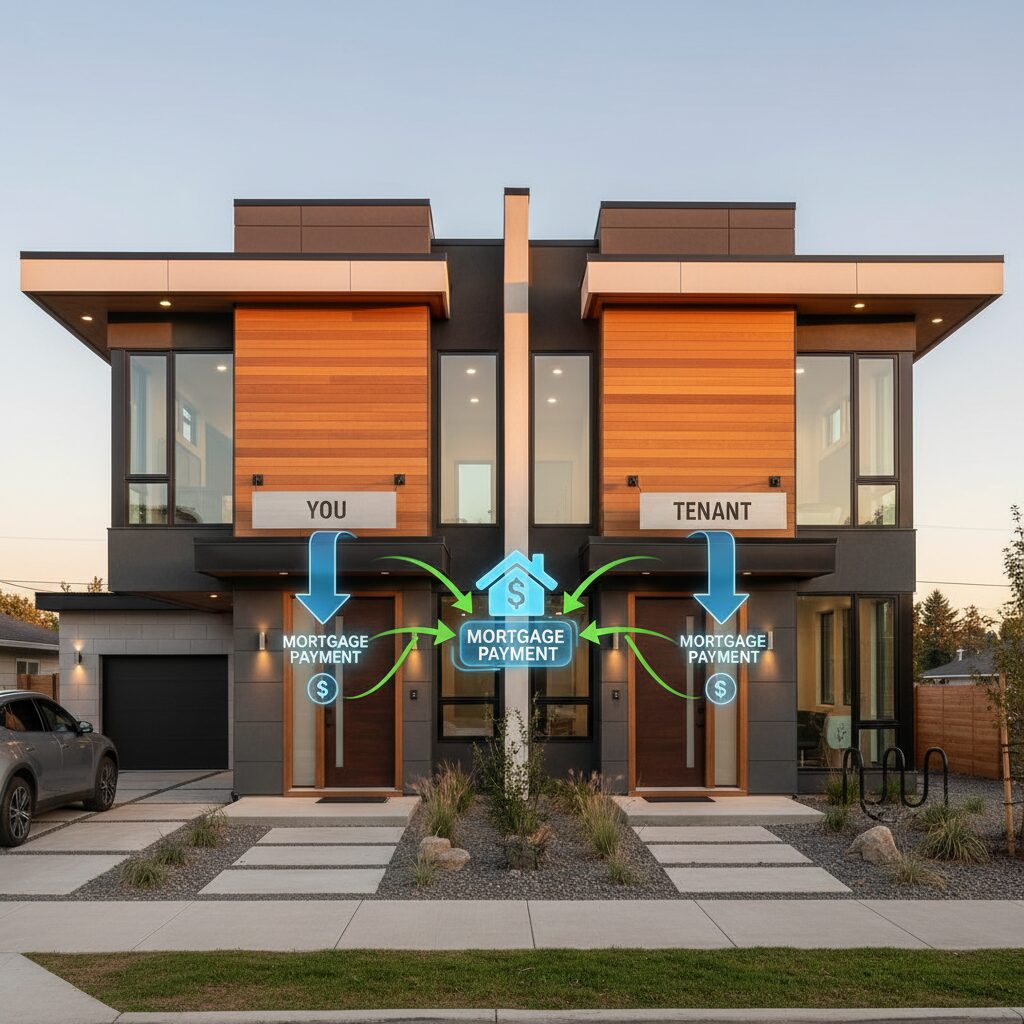
- Duplex / triplex / fourplex: You live in one unit; rent the others. FHA allows as little as 3.5% down on 2–4 unit owner-occupied properties, though you’ll pay mortgage insurance.[4]
- Single-family with rentable spaces: Finished basement with its own entrance, over-garage studio, or a large primary you can convert into two smaller rooms.
- ADU (Accessory Dwelling Unit): A backyard tiny home, garage conversion, or casita rented as a stand-alone unit. Lenders like AmeriSave offer renovation or construction-to-permanent products that can roll both purchase and ADU construction into one loan.[4]
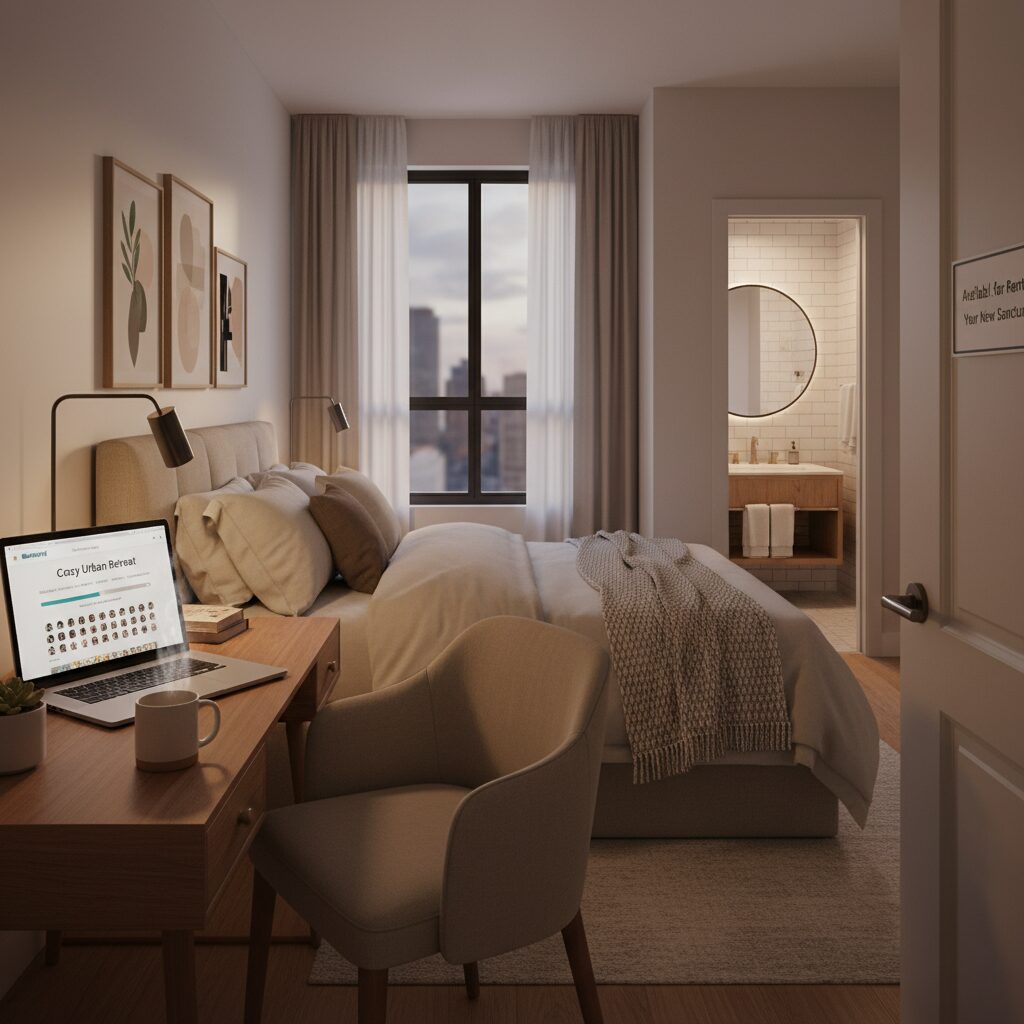
- Roommate-style living: You lease out 1–3 bedrooms separately to young professionals, grad students, or traveling nurses, often at 20–30% less than studio rent but with higher aggregate income for you.[4]
Real-World Example: Turning a $2,900 Payment into a $900 “Net”
Imagine a $550,000 duplex in a strong rental neighborhood.
- Purchase price: $550,000
- Down payment: 3.5% FHA = $19,250[4]
- Rate: 6.75% 30-year fixed (owner-occupied)
- All-in payment (PITI + FHA mortgage insurance): roughly $3,300/month (illustrative)
- You live in Unit A; rent Unit B for $2,000/month (conservative for many mid-tier markets)
Your effective cost to live there: about $1,300/month. In many cities, that’s less than renting a basic one-bedroom, but you’re also building equity, benefiting from any long-run appreciation, and controlling the entire property.
In higher-rent markets (college towns, medical hubs, urban cores), that same unit might rent for $2,400–$2,600,[2][4] pushing your effective housing cost under $1,000.
Modern Lending Tools That Make This Possible
To survive high rates, today’s buyers lean hard on loan programs and concessions designed for owner-occupants.
Low-Down-Payment Loans
- FHA loans (3.5% down, 2–4 units): Strong option if your credit score is in the fair-to-good range. The tradeoff is upfront and annual mortgage insurance (1.75% upfront, roughly 0.55–0.85% annually).[4]
- Conventional 3–5% down (e.g., Fannie Mae HomeReady, Freddie Mac Home Possible): Targeted at lower- to moderate-income buyers, often with reduced PMI costs and flexible guidelines for boarder/rental income.
Seller Concessions & Rate Buydowns
With days-on-market stretching in many areas, sellers and new-construction builders are again offering incentives:
- Seller credits toward closing costs or interest-rate buydowns—sometimes 2–3% of purchase price—can reduce your upfront cash and early payments.
- Temporary 2-1 buydowns (common with lenders like Rocket Mortgage, Fairway, and AmeriSave): Year 1, your rate might be 2% lower; year 2, 1% lower; then it resets. This helps while your income grows and rents adjust.
Modern buyers are pairing these tools with the extra income from roommates or an ADU, turning an intimidating payment into something manageable.
Who’s Willing To Pay You Rent Right Now?
The strategy only works if there’s durable demand for the spaces you plan to rent. Current high-demand tenant pools include:
- Travel nurses and medical staff near hospitals (13-week contracts, corporate stipends, strong per-room rents).[4]
- Graduate and professional students near universities, who often prefer furnished rooms in shared homes.
- Young professionals who can’t afford a studio but will happily pay for a nice room in a clean, modern house.
- Short- or mid-term renters (30–90 days) using platforms like Airbnb or Furnished Finder—though these require you to stay ahead of local regulations.[3][4]
A practical tactic many hosts use: intentionally price the first room or unit slightly below market to fill it fast and build social proof with strong reviews before nudging prices upward.[4]
Step-By-Step Game Plan For Three Common Scenarios
Scenario 1: You’re Renting Now And Want Your First Place
- Pick three target neighborhoods with strong rent-to-price ratios—look near universities, hospitals, or employment hubs.[2][3]
- Run the numbers backward: Use rental listings for comparable duplex units or rooms to estimate income. If a $500,000 duplex can generate $3,500 in gross rent when fully leased, see what your payment would be with 3.5% down and today’s rates.
- Get quote-level pre-approval with multiple lenders, including FHA and 3–5% down conventional options. Ask explicitly about using projected rental income for qualification.[3][4]
- Negotiate for seller credits to cover closing costs and/or a temporary rate buydown instead of just a lower purchase price.
- Move into the “least rentable” unit yourself (e.g., the smaller or slightly less updated one) and rent out the more desirable unit for top dollar.
Scenario 2: You Already Own A Home But Your Payment Feels Heavy
- Identify rentable spaces: Could you add a separate entrance to the basement? Convert an oversized living room into a bedroom? Finish a garage into a studio (check local codes first).[3]
- Price test with platforms: Look at what nearby rooms, basement units, or ADUs rent for on Zillow, Facebook Marketplace, or Furnished Finder.
- Explore renovation financing: Products like AmeriSave’s renovation loans can wrap upgrade or ADU costs into a new mortgage, paid over 30 years instead of on a credit card.[4]
- Start conservative: Take on one tenant first (ideally someone with predictable hours and background checks—travel nurses and grad students are popular choices).[4]
Scenario 3: You Want Maximum Privacy
If the idea of sharing a kitchen with strangers makes you uneasy, focus on properties with separate, self-contained units:
- Buy a home with an existing detached guest house, casita, or pool house and rent that structure.[4]
- Target duplexes with strong sound separation and private entrances.
- In some markets, small new-build communities offer “home + rentable suite” layouts aimed at owner-occupants who want income without roommates.
Modern Risks You Can’t Ignore
The old days of casually renting out a room with a handshake are fading. Attorneys warn that in 2025, renting even a single room makes you a business in the eyes of the law, and states are tightening definitions of habitability and landlord-tenant protections—even for live-in landlords.[1]
Key risks to manage:
- Changing landlord-tenant laws: Some states are adding just-cause eviction rules and extended notice for rent increases, with limited exemptions for owner-occupied properties.[1]
- Short-term rental crackdowns: Many cities now restrict or heavily regulate Airbnb-style rentals; in some markets, long-term tenants are the safer play.[3][4]
- Overly tight numbers: Financial planners advise baking in vacancy, maintenance, and conservative rent assumptions. If everything must go perfectly for the deal to work, that’s a red flag.[2]
Concrete Products & Services To Explore
To move from theory to action, focus on a few categories of tools:
- Mortgage products: FHA 203(b) and 203(k) (for light rehab), conventional 3–5% down programs (HomeReady, Home Possible), and renovation loans from lenders like AmeriSave designed for ADUs and major improvements.[4]
- ADU builders: Region-specific firms now offer turnkey ADU packages (often $120,000–$250,000 for a small 1-bedroom unit) that can rent for $1,500–$2,500/month in high-demand markets—check local players and prefab options.
- Tenant platforms: Zillow, Apartments.com, Facebook Marketplace for long-term tenants; Furnished Finder for travel nurses; Airbnb/VRBO for short stays where legal.
- Legal & tax pros: Real estate-savvy attorneys and CPAs can advise on using LLCs, lease structures, and what expenses you can legitimately deduct.[1][3]
What To Do This Week If You Want Your Home To Start Paying You Back
You don’t need to buy tomorrow. You do need a plan.
- Run a “live-in-owner” calculator on three properties: a duplex, a single-family with a rentable basement, and a home with ADU potential. Compare your net housing cost after realistic rents.
- Talk to two lenders about FHA vs. 3–5% down conventional, renovation loans, and seller credits.
- Walk three properties this month and evaluate them not as a consumer, but as someone buying a small business that happens to house you.
- Study your local rules on room rentals, ADUs, and short-term rentals so you stay on the right side of the law.[1][3]
If you’re serious about growing net worth in a high-rate world, the question isn’t “Will rates drop?” It’s “How quickly can I move into a property that works harder than I do?” The people who answer that now—before the next wave of buyers catches on—are the ones who’ll look back in five years and realize their home quietly became the most powerful wealth-building asset they own.

Unlock Full Article
Watch a quick video to get instant access.

Social Media